
Blog
Top 10 Home Door Replacement Options for Global Buyers
A new front door changes more than a home’s appearance. It affects the entry’s weather seal, daily security, and the first impression visitors see. For global buyers, the right home door replacement also depends on climate, opening size, material availability, maintenance needs, and local installation conditions. A coastal home may need corrosion-resistant hardware; a cold-climate property may benefit from a well-sealed, insulated door. Small details matter.
The 2024 Cost vs. Value Report from Remodeling and Zonda estimated a 188.1% cost recoup for a steel entry door replacement in its U.S. national analysis. That figure is a benchmark, not a guaranteed return: project costs and resale outcomes vary by location, product, and workmanship. Still, it shows why buyers compare more than purchase price. A door that fits poorly can undermine comfort and performance, even if its finish looks impressive.
This guide examines ten replacement options, from steel and fiberglass to solid wood and glass-panel designs. It considers durability, upkeep, style, and practical fit. One important sourcing note: no verifiable quotation from a named door-replacement expert was included in the materials provided, so I have not invented one. A product shortlist is useful. Careful measurement and a qualified local assessment matter just as much.
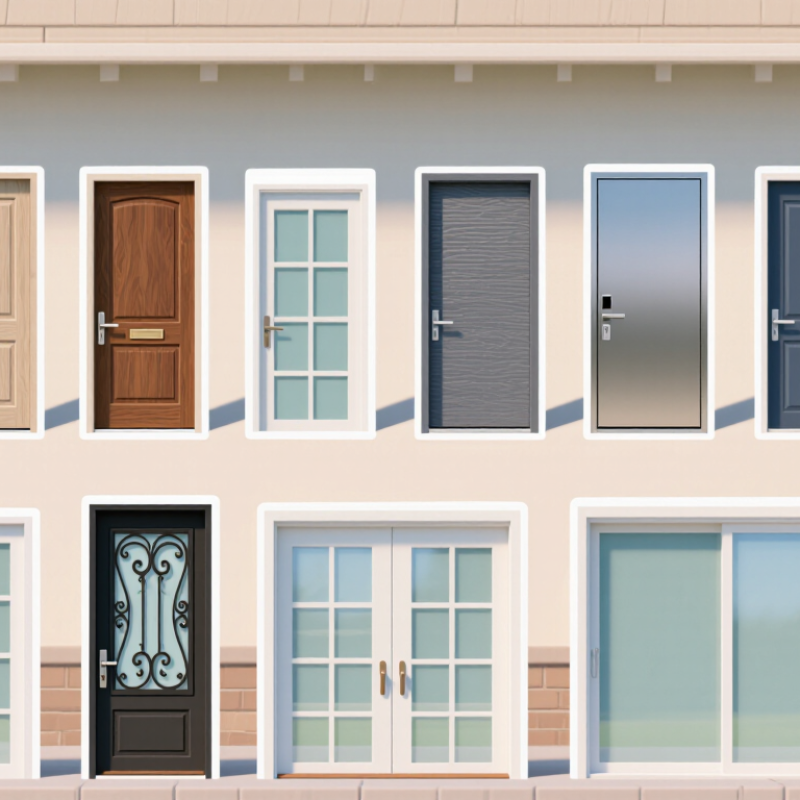
How Residential Door Replacement Options Are Classified
Residential door replacement options are easiest to compare by material, opening style, and performance. These categories describe different features, so one door may fit several groups. A steel entry door, for example, can also be insulated and glazed.
Material is a practical starting point. Fiberglass resists moisture and can imitate painted wood. Steel offers a firm, often economical surface, but may dent. Solid wood shows natural grain and can be refinished, though seasonal movement and upkeep deserve attention. For patio openings, buyers often compare sliding and hinged doors. Sliders save clearance beside furniture, while hinged units need room to swing. Measure twice. An awkward threshold can matter more than a catalog photo.
Performance categories include insulation, weather sealing, glazing, security hardware, and sound control. Ask for documented ratings where available, and compare the installed assembly, not just the door panel. A cold hallway may point to poor seals or installation gaps rather than the door material itself. This distinction is easy to miss. A site check should record opening dimensions, frame condition, wall exposure, and daily use. Classification is useful, but not perfectly neat; the best fit can change after an old frame is opened and inspected.
| No. | Door option | Classification | Common applications | Key advantages | Points to consider | Relative cost |
|---|---|---|---|---|---|---|
| 1 | Solid wood hinged door | Material: natural wood; operation: hinged | Main entrances, interior rooms, and traditional-style homes | Natural appearance; can be repaired or refinished; substantial feel | May respond to changes in moisture and temperature. Needs suitable finishing and periodic maintenance. | High |
| 2 | Engineered-wood interior door | Material: engineered wood or wood-based construction; operation: usually hinged | Bedrooms, bathrooms, closets, and other interior spaces | Available in a wide range of finishes; typically more dimensionally consistent than solid wood | Construction varies. Standard interior versions are not automatically suitable for exterior exposure or fire-rated openings. | Low to medium |
| 3 | Insulated steel entry door | Material: steel skin, often with an insulated core; operation: hinged | Front, side, and utility entrances | Durable surface; insulated-core models can help reduce heat transfer; compatible with many security hardware options | Check the finish and edge protection for corrosion resistance, especially in damp or coastal environments. A dent may be difficult to repair invisibly. | Medium |
| 4 | Fiberglass entry door | Material: fiberglass-reinforced exterior skin; operation: hinged | Exterior entrances in a range of climates | Resists many common moisture-related problems; some models provide an insulated core and wood-look finishes | Performance depends on the complete door system, glazing, seals, and installation. Surface damage can require specialist repair. | Medium to high |
| 5 | Aluminum-framed glazed door | Material: aluminum frame with glazing; operation: hinged or sliding | Patios, balconies, and contemporary exterior openings | Slim frame profiles can allow large glazed areas; aluminum is lightweight and does not rot | Thermal performance depends on frame design, glazing, and weather seals. Specify safety glazing where local codes require it. | Medium to high |
| 6 | uPVC hinged door | Material: unplasticized polyvinyl chloride; operation: hinged | Exterior entrances and utility doors | Low routine maintenance; does not rust or rot; insulated profiles are available | Quality, reinforcement, hardware, and exposure conditions affect durability and security. Check local availability of replacement parts. | Low to medium |
| 7 | Sliding patio door | Configuration: horizontally sliding panels; commonly framed in aluminum, uPVC, or wood | Patios, gardens, and balconies where swing clearance is limited | Does not need floor space to swing; provides a broad opening and substantial daylight when glazed | Track cleanliness, roller quality, drainage, weather seals, and locking hardware influence day-to-day performance. | Medium to high |
| 8 | French doors | Configuration: a pair of hinged leaves, commonly glazed | Patios, gardens, and interior connections between rooms | Both leaves can open to create a wide passage; glazed designs bring daylight into adjoining spaces | Needs swing clearance. Weather sealing and security depend on the meeting stile, locks, frame, and installation. | Medium to high |
| 9 | Bi-fold door | Configuration: multiple hinged panels that fold to one or both sides | Wide patio openings, room dividers, and closet openings | Can create a wide opening while stacking panels to the sides | Requires careful measurement and correctly installed tracks and hardware. Panel stacking occupies some opening space. | High |
| 10 | Fire-rated door assembly | Performance classification: tested and certified door, frame, seals, and hardware assembly | Locations where building codes require a fire-resisting opening, such as certain garages, corridors, or shared areas | Provides a defined level of fire resistance when installed and maintained as a complete approved assembly | Required ratings and permitted locations vary by jurisdiction. The door, frame, hardware, glazing, and installation must meet applicable local requirements. | Medium to high |
| Comparison note: Cost is a broad relative guide, not a quotation; prices vary by country, size, materials, glazing, hardware, finish, and installation. Energy efficiency, security, weather resistance, and code compliance depend on the complete door assembly and correct installation. | ||||||
Related Posts
-
Exploring Alternative Choices: Top Picks for Quality Exterior Door Installations
-

Upgrade Your Curb Appeal: 7 Data-Backed Reasons Why Home Door Replacement Matters More Than You Think
-
Top 5 Benefits of Home Door Replacement for Enhanced Security and Style
-
Understanding the Challenges with Solid Doors in Modern Construction Standards
-
The Ultimate Guide to Choosing the Perfect Front Doors for Your Home
-
Why Choose Wood Door Replacement?