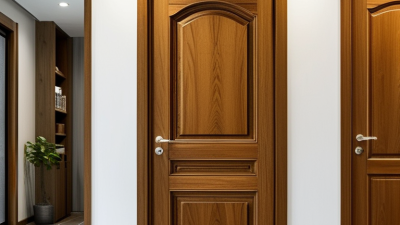
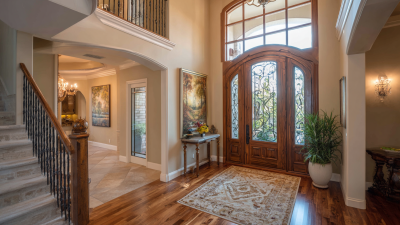
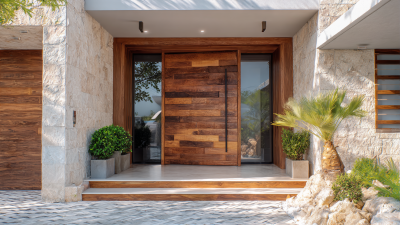
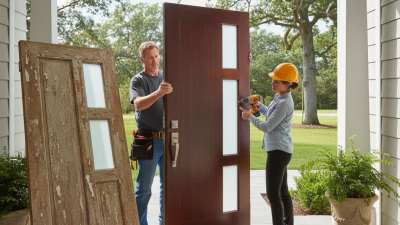
Why choose wood door replacement? The answer usually begins with performance, not appearance. A warped slab can leave a visible strip of daylight beneath the threshold. Moisture may soften the lower rail. Repeated repainting can hide deeper decay. The U.S. Department of Energy’s Building America research identifies air leakage around doors and windows as a source of energy loss. A properly fitted wood door can reduce drafts while improving security, comfort, and curb appeal.
The market also supports careful planning. Harvard University’s Joint Center for Housing Studies projected nearly $481 billion in U.S. homeowner improvement spending for 2023. That figure reflects strong renovation demand, but it does not make every replacement worthwhile. Sometimes, repair remains the more responsible choice. Preservation expert Carl Elefante, FAIA, expressed this principle clearly: “The greenest building is the one that is already built.” His insight should guide every wood door replacement decision.
Look closely first.
Measure the frame, inspect the sill, and check the hinges. A solid wood door may last decades when protected from standing water and direct weather exposure. Replacement becomes more persuasive when rot reaches structural joints, the frame has shifted, or sealing repairs repeatedly fail. Energy performance also depends on installation quality. Even an expensive door performs poorly with a crooked jamb or missing weatherstripping. This is where homeowners often underestimate the work. A beautiful door cannot compensate for careless fitting. The best choice balances craftsmanship, maintenance, climate, and the building’s original character.
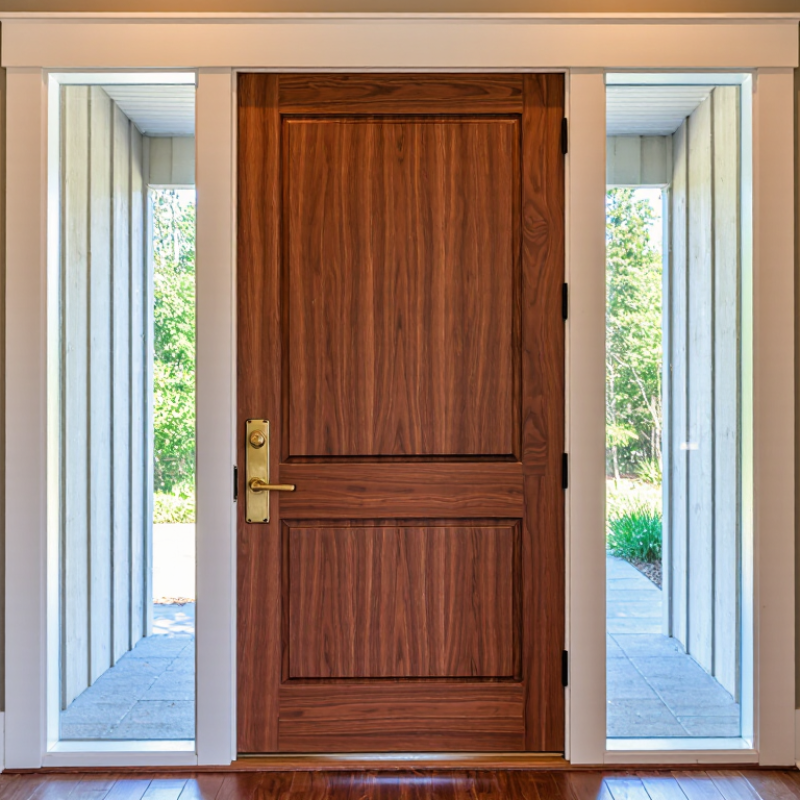
Wood door replacement involves more than removing an old slab. A professional first checks the opening, frame, threshold, hinges, and surrounding wall. Moisture marks may indicate hidden damage. Uneven floors can also affect the door’s swing.
Measurements must be precise. The installer records width, height, jamb depth, hinge positions, and handing.
Measure twice. A replacement door should suit the existing opening, not merely look attractive online.
Wood species, grain direction, core construction, and finish affect stability. Exterior doors need weather-resistant coatings on every exposed edge. The bottom edge is often forgotten. That small mistake can invite swelling.
During installation, the old door and damaged hardware are removed carefully. The frame is repaired or replaced when it no longer holds fasteners securely. Shims help keep the jamb straight.
The installer checks diagonal measurements, reveals, latch alignment, and clearance. Insulation around the frame reduces drafts, but too much foam can distort it.
After fitting, the door should close without force and remain open at several positions. I have seen rushed replacements scrape the threshold within weeks. Better planning prevents that, although seasonal movement may still require adjustment.
Maintenance matters: inspect the finish, hinges, weatherstripping, and drainage twice a year.
Why Choose Wood Door Replacement?
An existing wood door may look charming while quietly admitting drafts, moisture, and street noise. Replacement becomes reasonable when the slab swells, the frame softens, or the lock no longer aligns smoothly. During an inspection, check the lower corners first. They often reveal water damage before the surface does. The U.S. Department of Energy reports that air leakage can account for 25% or more of household heating and cooling energy use. A poorly sealed door can contribute to that waste, especially near uneven thresholds.
A new wood door can improve insulation, weather resistance, security, and daily comfort. Modern insulated cores and multi-point seals help reduce cold spots around the entryway. The 2024 Cost vs. Value Report also shows that exterior door replacement remains one of the stronger home improvement investments, although its figures vary by material and region. Wood may deliver warmth and character, but it needs proper finishing and maintenance. That part is easy to underestimate.
Replacement is not always necessary. If the frame is sound, new weatherstripping, threshold adjustment, or localized repair may solve the problem. Still, repeated sticking, peeling finish, and recurring drafts suggest deeper failure. Industry guidance recommends evaluating the frame, flashing, drainage, and surrounding wall—not only the door panel. A rushed replacement can hide the real leak. That would be an expensive mistake.
| Replacement Factor | Common Condition of the Existing Wood Door | Practical Indicator | Why Replacement May Be the Better Option | Expected Benefit |
|---|---|---|---|---|
| Age and Service Life | Older doors may have repeated repairs, worn finishes, or weakened joints. | Many exterior wood doors can last about 20–40 years when properly protected and maintained; exposure and installation quality affect service life. | A replacement can provide a more reliable door slab, frame, threshold, and weather-sealing system than continued spot repairs. | Improved reliability and reduced maintenance frequency. |
| Warping or Swelling | The door rubs against the frame, does not close evenly, or changes shape with humidity. | Uneven gaps, sticking, difficult locking, or visible bowing. | Severe deformation is often difficult to correct permanently with sanding or adjustment alone. | Smoother operation and a more consistent seal around the opening. |
| Moisture and Rot | Water damage appears at the bottom edge, corners, joints, or frame. | Soft wood, discoloration, crumbling material, or a persistent musty odor. | Replacing damaged components helps prevent moisture-related deterioration from spreading to adjacent trim or framing. | Better durability and lower risk of continuing water damage. |
| Drafts and Air Leakage | Worn weatherstripping or an uneven frame allows outdoor air to enter. | Noticeable cold or warm air near the perimeter, daylight around the closed door, or rattling during windy weather. | A properly fitted replacement with new seals can address both the door and the surrounding contact points. | Improved indoor comfort and potentially lower heating or cooling demand. |
| Energy Performance | The existing door may have a thin, cracked, or poorly sealed construction. | A large temperature difference between the interior door surface and the surrounding wall may indicate weak insulation or air sealing. | A modern, well-sealed wood door assembly can reduce air leakage compared with a damaged or poorly fitted door. | More stable interior temperatures and improved comfort near the entry. |
| Security and Hardware | Loose hinges, worn locks, weak strike areas, or a damaged frame reduce closing accuracy. | The door can be lifted, forced, or left misaligned when locked. | Replacement allows the door, frame, hinges, lock preparation, and strike area to be installed as one coordinated system. | More dependable closing, locking, and everyday operation. |
| Appearance and Curb Appeal | The finish is faded, peeling, heavily scratched, or mismatched with the exterior. | Frequent refinishing is required to maintain an acceptable appearance. | A new wood door provides a clean surface and allows the design, stain, panels, and glazing to be updated together. | A refreshed entrance and stronger visual consistency with the property. |
| Maintenance Requirements | The door needs repeated painting, staining, sealing, tightening, or adjustment. | Repair and refinishing work is needed more than occasionally to keep the door functional. | When repair costs and labor accumulate, replacement may offer better long-term value than repeated corrective work. | More predictable upkeep and easier long-term planning. |
| Safety and Building Requirements | The door lacks required clearances, safety glazing, or applicable fire- or weather-performance features. | The opening does not meet current project requirements or cannot be adjusted without major modification. | A properly specified replacement can be selected to meet applicable local codes and project requirements. | Better compliance, functionality, and occupant safety. |
Note: Actual service life, energy performance, maintenance needs, and replacement value depend on climate, exposure, construction, installation quality, ventilation, and ongoing care.
A well-fitted wood door can make daily routines feel noticeably easier. It closes with a firm, quiet contact instead of rattling in the frame. A solid core may also reduce hallway noise and improve the entryway’s sense of privacy. During replacement, installers should check the jamb, threshold, hinges, and weatherstripping. A beautiful slab cannot perform well when the frame is uneven. Small details matter.
Wood also changes how a home looks from the street and inside. Natural grain adds warmth that painted metal or synthetic surfaces may not provide. A carefully chosen stain can highlight nearby flooring, trim, or stair rails. Glazing can bring soft daylight into a dark foyer. Even the door’s proportions affect the room. Taller panels may make a low ceiling feel more balanced.
Moisture remains the main concern. Exposed edges, poor drainage, or neglected finish can lead to swelling and sticking. I have seen attractive doors lose their smooth operation because owners ignored a small finish crack. Regular inspection helps, but replacement decisions should consider local weather and the home’s exposure. Sometimes a simpler design works better than an elaborate one. The most reliable choice combines stable construction, accurate installation, and a finish that can be renewed.
Materials, styles, and features deserve careful attention before replacing a wood door. Solid wood offers natural grain, weight, and repairability. However, it can expand or shrink with humidity. Engineered wood often provides better dimensional stability. It may resist seasonal movement more effectively, though its quality depends on construction. In renovation work, I have seen beautiful doors perform poorly because moisture conditions were ignored. That mistake is easy to repeat.
Style should support the building, not overpower it. A simple shaker design suits many homes, while carved panels create a more traditional appearance. Glass can bring daylight into a dark hallway, but textured glazing offers more privacy. Check the door’s swing, threshold height, and available wall space before ordering. Features also affect daily comfort. Insulated cores improve temperature control, weather seals reduce drafts, and durable hinges support heavier panels. Strong locks matter, but poor installation can weaken even excellent hardware. That part is often underestimated.
Tips: Place a small sample near the entrance and observe it in morning and evening light. Confirm the frame is square. Measure twice, then measure again. Ask how the finish handles scratches and future touch-ups. A darker stain may look elegant, yet it can reveal dust and uneven preparation. Choosing quickly feels efficient, but living with the door exposes details photographs cannot show.
Replacing an old wood door can improve comfort, security, and daily usability. Proper installation starts with accurate measurements, not guesswork. The installer should inspect the frame, threshold, hinges, and surrounding wall for moisture damage. A door that looks square may still rub near the bottom. Small errors become annoying every day.
Wood requires practical maintenance. Wipe the surface with a soft, slightly damp cloth, especially after rainy weather. Check the finish around the lower edge, where water often collects. Renewing the protective coating every few years can reduce swelling, cracking, and fading. However, wood is not maintenance-free. Some homeowners underestimate seasonal movement and blame the door too quickly. Temperature and humidity can change its fit.
Long-term value depends on materials, workmanship, and care. A well-fitted wood door can reduce drafts and make an entrance feel warmer and quieter. Solid construction may also withstand repeated use better than a lightweight replacement. During renovation work, installers often find that replacing damaged trim at the same time prevents future leaks. That adds cost now, but may avoid larger repairs later. A careful inspection matters more than an attractive finish.
Installation, Maintenance, and Long-Term Value
A wood entry door typically requires regular inspection and cleaning, periodic refinishing, and occasional weatherstrip replacement. Over a 10-year planning period, these maintenance actions are manageable and can help preserve appearance, weather resistance, energy performance, and service life. Actual frequency depends on climate, sunlight, rain exposure, and finish quality.
Planning benchmarks: annual inspection, cleaning twice per year, refinishing approximately every 3–5 years, and weatherstrip replacement approximately every 5–10 years.