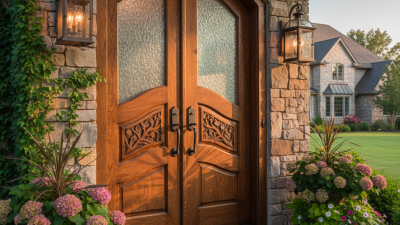
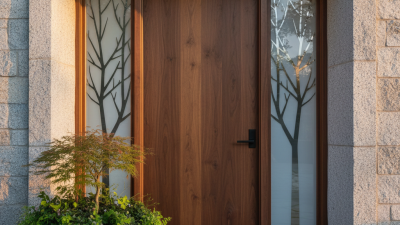
A solid wood front door is more than a handsome entrance. It meets rain, sunlight, temperature changes, and daily use, often all at once. The right choice should suit your home’s style and local conditions. It should also fit the opening accurately and close without sticking. Wood scientist Bruce Hoadley, author of Understanding Wood, explains how wood responds to moisture. A practical paraphrase of his guidance is: “Expect wood to move as its moisture content changes.” That matters. A beautiful door can still swell, shrink, or need adjustment when its environment changes.
When comparing solid wood front doors, look beyond the species name. Ask how the door is constructed, what finish protects it, and whether its design suits an exposed entry. A deep porch offers different protection from a doorway facing afternoon sun and driving rain. Check the door’s thickness, panel construction, grain, and finish options; request clear care instructions from the manufacturer. Feel the surface if possible. Notice the grain under the finish. Ask how often the finish may need attention in your climate. These details are less exciting than choosing a warm walnut tone, but they can shape long-term performance. And honestly, no single wood species is best for every home. Budget, exposure, craftsmanship, and maintenance habits all matter. This guide will help you weigh those trade-offs and choose a door that looks right, fits well, and can be cared for realistically.
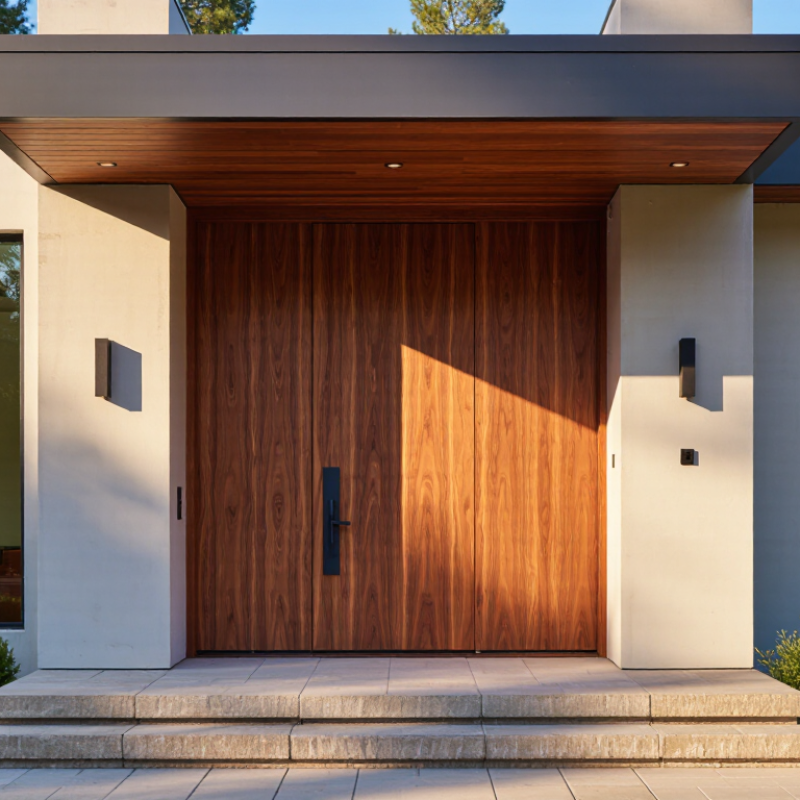
A solid wood front door is an assembly, not simply a thick slab. Its stiles run vertically, while rails cross the door and support the panels. In traditional designs, panels sit in grooves and can move slightly as humidity changes. That small allowance matters. A panel fixed too tightly may crack or push joints apart.
Wood movement is measurable. The USDA Forest Products Laboratory’s Wood Handbook reports that many species shrink about 6–12% across the grain and 3–6% radially, from green to oven-dry. These are broad ranges, not a prediction for a finished door. Species, grain direction, and indoor moisture all affect movement. Ask how the lumber was dried and whether the door was acclimated before installation. I would check this twice.
Construction details reveal durability. Look for tight, well-fitted rail-and-stile joints, consistent panel gaps, and no visible glue lines opening at the corners. A laminated or engineered core may improve stability, but it is not the same construction as a door made entirely from solid boards. Confirm what “solid wood” means in the specification. Finish should cover faces, edges, and the top and bottom; exposed end grain can absorb moisture quickly. Even careful construction can swell in a damp entryway. That is easy to overlook.
Janka hardness indicates resistance to denting, but it does not measure a door’s overall strength or weather performance. Door construction, joinery, finish, and moisture protection also matter. Values shown are representative ratings in pounds-force (lbf); actual lumber can vary.
How to Choose the Best Solid Wood Front Doors?
Comparing Wood Species, Grain, and Durability
A solid wood door faces more than daily use. Rain, sunlight, and indoor heating can all affect its performance. Oak offers a pronounced grain and strong wear resistance; mahogany usually has a finer, more even appearance. Cedar is lighter, but its softer surface may show dents sooner. Species names are only a starting point. Check the door’s construction, finish, and exposure, too.
Grain matters. Straight, consistent grain can help a door look balanced, while irregular patterns add character but may reveal movement more visibly. The USDA Forest Products Laboratory’s Wood Handbook explains that wood changes dimension as its moisture content shifts below the fiber-saturation point, typically around 30%. That makes sealing all six surfaces—including the top and bottom edges—important. A sheltered entry usually asks less of a door than one exposed to driving rain. Still, even a good finish needs maintenance.
Tips: Ask for the species and the door’s construction details. Look for well-sealed edges and solid joinery. If possible, inspect a sample in daylight; grain and color can look different indoors. Don’t choose by hardness alone. I might still favor a dramatic grain, but appearance cannot replace a realistic maintenance plan.
| Wood Species | Typical Grain and Appearance | Natural Durability | Stability and Practical Considerations | Front-Door Suitability |
|---|---|---|---|---|
| Genuine mahogany | Usually straight, even grain with a fine to medium texture; color ranges from reddish brown to deeper brown. Appearance varies by species and source. | Many commonly used mahogany species offer good resistance to decay, but durability is species-dependent. | Generally works and finishes well. Like all solid wood, it can swell or shrink as moisture conditions change. | A strong all-around choice when the exact species is identified and the door is properly sealed and maintained. |
| White oak | Prominent open grain, often with noticeable rays and flecks in quarter-sawn boards; typically light to medium brown. | Good natural decay resistance compared with many common domestic hardwoods. Its closed vessel structure has historically made it useful in water-resistant applications. | Dense and strong, but its pronounced grain can show clearly through finishes. Movement still occurs with changing humidity. | A durable, characterful option; use a suitable exterior finish and protect exposed end grain. |
| Teak | Usually straight to slightly irregular grain with a coarse, oily feel; golden brown tones can darken over time. | Highly regarded for natural resistance to moisture, decay, and many wood-boring insects. | Natural oils can affect finish adhesion, so surface preparation and compatible coatings matter. Often costs more than common door woods. | Well suited to exposed conditions when correctly specified and finished, though availability and cost may be limiting factors. |
| Western red cedar | Typically straight grain and a relatively uniform texture; color ranges from pale amber to reddish brown. | Heartwood has good natural resistance to decay; sapwood is less durable. The wood is relatively soft. | Lightweight and easy to work, but more prone to dents and surface damage than denser hardwoods. | A useful choice where low weight and natural decay resistance matter; protect it from impact and keep the finish maintained. |
| Douglas fir | Usually straight, pronounced grain with strong growth-ring contrast; ranges from light tan to reddish brown. | Generally lower natural decay resistance than teak, cedar heartwood, or white oak; protection from persistent moisture is important. | Strong for its weight and commonly used in joinery. It can weather unevenly if left exposed without a protective finish. | A practical option for sheltered entries with a reliable exterior coating and routine inspection. |
| Black walnut | Mostly straight grain, sometimes with attractive waves or curls; rich medium to dark brown color. | Moderately durable heartwood, but not typically chosen for prolonged, unprotected exposure to weather. | Works well and is valued for its appearance. Dark color and grain can vary between boards. | Best for protected entrances or designs where appearance is a priority and the door can be carefully sealed and maintained. |
| American cherry | Fine, close, usually straight grain; pale pinkish brown when fresh, deepening toward a warmer reddish brown with light exposure. | Low natural resistance to decay and insect attack compared with more durable exterior species. | Fine texture takes a smooth finish, but color changes over time and exterior exposure requires effective protection. | Generally better for sheltered locations than highly exposed entries; choose it for appearance only when maintenance needs are acceptable. |
Selection tip: Species alone does not determine service life. Check whether the door is made from heartwood or sapwood, how its components are joined, and whether all faces and edges are sealed. A deep entry overhang, good drainage, and regular finish maintenance can help reduce moisture-related swelling, shrinkage, and deterioration.
Choosing a solid wood front door starts with the opening, not the catalog photo. Measure the frame width, height, wall thickness, and swing direction; also note nearby steps, trim, and hallway clearance. A wide entry may suit a pair of doors, but both leaves need room to open without hitting a wall or railing. For a single door, check the actual clear passage, not only the slab’s nominal size. The 2021 International Residential Code sets a 32-inch minimum clear width and 78-inch minimum clear height for the required egress door. Local adoption and project conditions can differ, so confirm the applicable requirements.
Tips: Measure at the top, middle, and bottom. Older frames can be out of square. Record the smallest measurement, then have the rough opening checked before ordering.
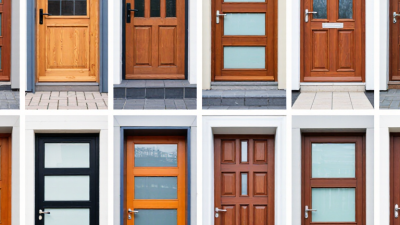
Choose the panel style to match the home’s proportions: a simple two-panel door can feel calm on a compact façade, while a taller door with sidelights can brighten a deep entry. More glass brings daylight, but privacy and heat transfer deserve attention.
The U.S. Department of Energy reports that windows account for about 25–30% of residential heating and cooling energy use; that figure concerns windows, not doors, but it makes glazing choices worth reviewing.
Ask for the door’s documented thermal ratings, and consider whether the configuration leaves enough solid wood for strength and a balanced appearance. There isn’t one perfect proportion. A striking design can still feel awkward in daily use.
Security is a property of the whole entry, not the wood slab alone. The FBI’s 2019 Crime in the United States report classified 55.7% of reported burglaries as forcible entry. That makes the frame, hinges, strike plate, and lock installation important points to inspect. Look for a rigid frame and a strike plate secured into framing, not only trim. Check that the door closes without lifting or pushing. Not just the slab. Glass near the lock can also affect security, so consider its position and protection.
Insulation depends on fit as much as material. The U.S. Department of Energy’s Energy Saver guidance says air leaks can waste 5% to 30% of household energy use. Ask for a National Fenestration Rating Council label when available; its U-factor rates heat transfer, and lower values indicate less heat flow. Weather resistance needs equal attention. The USDA Forest Products Laboratory’s Wood Handbook explains that wood changes dimension as its moisture content changes. Inspect the finish on edges and the bottom rail, and choose effective perimeter seals and a tight-fitting threshold. After heavy rain, check for dampness or swelling. Even a well-made door can need adjustment. That detail is easy to miss.
A finish does more than set the door’s color. It slows moisture exchange and helps protect the wood from sunlight, rain, and daily handling. For an exterior door, choose a coating rated for outdoor use, and check its care instructions. A clear finish shows grain beautifully, but fading may be easier to notice. Pigmented finishes often offer stronger UV protection.
Cover every surface, including the top, bottom, and hinge edges. These hidden areas can absorb moisture when left bare. Apply thin, even coats, and allow each one to dry fully. Test the finish on a small offcut first; the color can look different on the installed door. Recoat when the surface dulls, cracks, or stops shedding water. I’ve seen people overlook the bottom edge. It is easy to miss.
Installation matters just as much as the finish. Measure the frame at several points, since older openings are rarely perfectly square. Leave the clearance specified by the door maker, and use shims to keep the jamb plumb without twisting it. Confirm that the threshold drains outward and that weatherstripping seals evenly when the door closes. A tight fit should not mean a forced latch. Solid wood can swell during humid seasons, so check the gap after installation and adjust hardware or sealing details if needed. If the frame is badly out of square, a qualified installer can prevent costly binding and uneven wear.