Choosing the China best contemporary doors manufacturers requires more than comparing showroom photographs. This guide examines suppliers through practical, verifiable criteria. These include factory experience, material quality, production capacity, customization, and after-sales support. A reliable manufacturer should explain its door-core structure clearly. It should also provide samples, technical drawings, and installation guidance. Details matter, such as hinge alignment, surface durability, and seal performance around the frame. Small defects often become expensive problems after installation.
The discussion focuses on contemporary doors for residential, hospitality, and commercial projects. It considers manufacturers producing timber, glass, metal, and mixed-material designs. Factory visits, independent inspections, project references, and documented certifications can strengthen supplier evaluation. However, online information is not always complete or current. No ranking is perfect. That limitation matters.
A polished showroom may hide inconsistent production standards. A lower price may reflect thinner materials, weaker hardware, or limited service. Buyers should request finish samples under natural and artificial light. They should confirm tolerances, packaging methods, delivery schedules, and replacement procedures before placing orders. Communication quality also reveals expertise. Can the supplier answer technical questions without vague promises? Can it adapt drawings without losing essential performance?
This introduction sets a careful framework for identifying credible Chinese manufacturers. It does not treat marketing claims as proven facts. Instead, it encourages evidence-based comparison and realistic expectations. Good doors should look refined, operate quietly, and remain stable through daily use. Sometimes, the most impressive option is not the safest choice.
A contemporary door manufacturer in China is more than a factory with attractive catalog images. It combines architectural design, material control, precision production, and dependable project support. Look for teams that understand clean lines, concealed hardware, flush frames, and narrow sightlines. They should explain how each detail performs in apartments, hotels, offices, or coastal homes. Details matter.
Professional manufacturers connect design decisions with measurable specifications. They can discuss core construction, surface durability, acoustic ratings, fire performance, and moisture resistance without vague promises. Ask for section drawings, sample corners, test reports, and documented quality checks. A strong supplier also confirms tolerances, packaging methods, lead times, and replacement procedures before production begins. This is where experience shows.
Reliable communication matters as much as machinery. An experienced project team reviews opening sizes, wall conditions, local building codes, and installation sequences. Factory visits, video inspections, and sample approvals can reveal whether production matches the sales presentation. Still, no manufacturer gets every detail right. Small finish variations may appear, especially across large batches. Better companies admit this risk, define acceptable limits, and correct the process instead of hiding it. That honesty is useful.
China Best Contemporary Doors Manufacturers?
Evaluating China’s contemporary door manufacturers requires more than attractive catalogs. In project reviews, I examine material quality, production control, and installation details. A factory sample should show even edges, stable finishes, accurate hinges, and smooth closing. Ask whether the door core resists moisture, warping, and repeated daily use. Request documented test results, production photos, and clear quality standards. Certifications should match the destination market and product type.
Tips: Compare samples under natural light. Check corner joints closely. Ask for a written tolerance range. Visit the factory when possible. Speak with recent buyers, not only sales representatives. A polished catalog proves little. Packaging also matters; damaged corners can erase good manufacturing work. Confirm lead times, replacement procedures, and inspection responsibilities before placing an order. Contemporary designs often include concealed frames, large panels, or unusual finishes, so customization should be tested before mass production.
Communication deserves careful evaluation. Strong manufacturers explain limitations instead of promising everything. I once considered a supplier with excellent samples but vague drawings; that was a warning. My assessment was not perfect, because small hardware issues appeared only after installation. This is why prototypes, detailed specifications, and staged inspections remain essential. Reliable partners provide consistent updates and respond with measurable corrective actions. Price matters, but predictable performance usually matters more.
China’s contemporary door market covers more than flat interior panels. Key categories include hinged, pivot, sliding, pocket, and folding doors. Flush doors suit clean corridors and compact apartments. Pivot doors create a strong entrance statement, but they need accurate floor support. Sliding and pocket doors save space, although poor rollers can create noise and alignment problems.
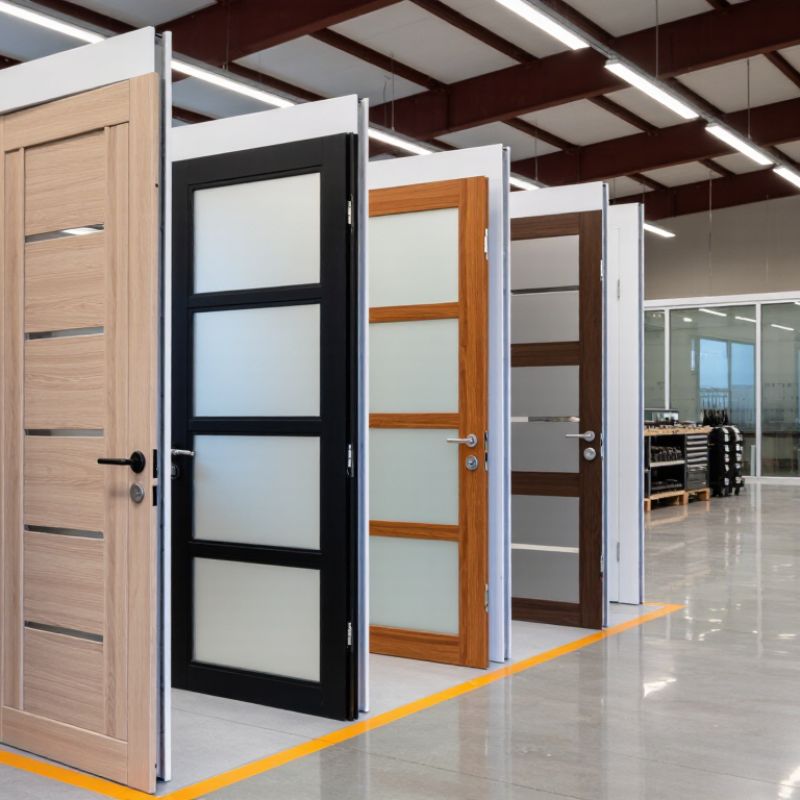
Popular design styles include minimalist, Japandi, warm modern, and refined industrial. Minimalist doors often use concealed frames, narrow shadow gaps, and matte white or wood-grain finishes. Japandi designs combine pale oak tones with simple hardware and soft textures. Warm modern doors may pair walnut veneer with bronze details. Industrial options commonly use slim black aluminum, ribbed glass, or dark laminate surfaces. Small details matter. A three-millimeter gap can change the entire visual effect.
Reliable sourcing requires more than attractive catalog images. Ask for material specifications, moisture resistance data, hardware samples, and documented quality inspections. For high-traffic areas, compare hinge cycles and surface durability. Acoustic doors need tested performance, not just a thick core. Fire-rated products also require valid certification for the target market. A common mistake is selecting the finish first. The door weight, wall structure, and installation tolerance should guide that decision. Even excellent manufacturing can fail when site measurements are rushed. Perfect symmetry is not always practical. Slight texture variation may make natural veneer feel more authentic.
| Product Category | Common Materials | Typical Design Styles | Key Performance Features | Typical Applications | Typical Configuration Options |
|---|---|---|---|---|---|
| Interior Flush Doors | Engineered wood, MDF, veneer, painted panels | Minimalist, Scandinavian, Japandi, modern classic | Clean surfaces, concealed visual detailing, flexible finish selection | Bedrooms, living rooms, offices, apartments | Single leaf, double leaf, concealed frame, standard or custom height |
| Aluminum-Frame Glass Doors | Powder-coated aluminum, tempered glass, laminated glass | Industrial, contemporary, slim-frame, loft-inspired | Light transmission, visual separation, corrosion-resistant frame finishes | Kitchens, home offices, dining areas, commercial interiors | Clear, frosted, reeded or tinted glass; hinged or sliding operation |
| Sliding Barn-Style Doors | Solid wood, engineered wood, steel hardware, glass inserts | Rustic modern, industrial, farmhouse contemporary | Space-saving opening method and strong visual statement | Pantries, studies, utility rooms, retail and hospitality spaces | Top-mounted track, soft-close hardware, solid or glazed panels |
| Pocket and Concealed Doors | Engineered wood, MDF, aluminum components, gypsum-board-compatible frames | Ultra-minimalist, seamless, contemporary architectural | Maximizes usable wall space and supports uninterrupted wall lines | Bathrooms, bedrooms, compact apartments, premium offices | Single or double pocket, flush pull, soft-close sliding system |
| Pivot Doors | Aluminum, steel, solid wood, veneer, insulated or laminated glass | Statement contemporary, monolithic, luxury modern | Wide opening potential and distinctive architectural movement | Residential entrances, galleries, hotels, high-end commercial spaces | Central or offset pivot, concealed closer, oversized leaf options |
| Exterior Entry Doors | Thermally broken aluminum, steel, fiberglass, engineered timber | Modern geometric, understated luxury, natural-material contemporary | Weather resistance, thermal performance, security hardware compatibility | Houses, villas, apartment buildings, office entrances | Insulated cores, multi-point locks, sidelites, transoms, custom finishes |
| Acoustic Interior Doors | Solid or composite cores, acoustic seals, veneer, laminate, painted surfaces | Quiet luxury, modern hotel, professional workspace | Improved sound reduction when correctly specified with perimeter seals and compatible walls | Bedrooms, meeting rooms, recording spaces, executive offices | Drop seals, magnetic seals, solid cores, flush or framed construction |
| Fire-Rated Contemporary Doors | Fire-resistant composite cores, steel, certified glass, mineral-based components | Flush modern, glazed contemporary, commercial minimal | Fire resistance depends on tested door-set construction and installation requirements | Hotels, offices, apartments, public and commercial buildings | Single or pair doors, vision panels, panic hardware, certified frames |
| Moisture-Resistant Utility Doors | Aluminum, PVC-coated panels, moisture-resistant composite boards, stainless hardware | Simple contemporary, functional minimalism, light industrial | Suitable for humid areas when material, edge treatment and hardware are properly selected | Bathrooms, laundry rooms, service areas, coastal interiors | Ventilation grilles, waterproof edges, sliding or hinged operation |
Note: Actual performance, fire ratings, acoustic values, thermal properties and hardware compatibility should be verified against the applicable product test reports, project specifications and local building codes.
Choosing a contemporary door manufacturer in China requires more than comparing catalog photos. During factory visits, I examine panel flatness, edge joints, and surface protection. A precise door should maintain consistent gaps after assembly. Reliable factories often use calibrated CNC equipment, controlled sanding, and documented inspections. Ask for moisture readings, dimensional tolerances, and hardware load tests. These details reveal manufacturing discipline better than polished showroom samples.
Material selection affects both appearance and service life. Solid wood offers warmth, but it needs humidity control to reduce warping. Veneered MDF provides a cleaner, more consistent surface for modern interiors. Aluminum doors suit slim frames and damp areas, while laminated or tempered glass adds light and strength. Check finish samples under daylight and warm lighting. I once approved a sample that looked excellent in a showroom, yet its edge color changed at home. That mistake still affects how I evaluate coatings.
Customization should begin with a technical drawing, not a vague picture. Confirm opening size, wall thickness, swing direction, concealed hinge capacity, lock preparation, and cable routes. Experienced manufacturers can adjust core construction, veneer direction, paint sheen, acoustic infill, and threshold details. They should provide a physical mock-up for unusual sizes or curved designs. Be careful with “fully custom” claims; some factories modify only standard shells. Clear approvals, batch labeling, and final inspection photos make quality easier to trace. Small omissions can create expensive installation problems.
China Best Contemporary Doors Manufacturers?
How to Select the Best Manufacturer for Your Project
Choosing a contemporary door manufacturer requires more than comparing online photos. In project reviews, I have seen attractive finishes hide weak edge sealing and inconsistent dimensions. Ask for factory videos, material specifications, production samples, and recent project references. A reliable manufacturer should explain core construction, surface treatment, hardware options, and testing results clearly. Vague answers are warning signs.
Tips: Request one full-size sample before placing a large order. Check its weight, hinge alignment, closing sound, surface uniformity, and packaging. Measure the sample against your approved drawings. Even a two-millimeter difference can complicate installation. Confirm moisture resistance, fire performance, acoustic ratings, and applicable regional certifications. Do not accept copied documents without verification.
Communication is equally important. Your manufacturer should confirm drawings, tolerances, delivery dates, inspection steps, and replacement procedures in writing. I once underestimated the value of packaging details; several corners arrived damaged because internal protection was too thin. That mistake changed my inspection checklist. Review the contract carefully, including color approval, payment stages, warranty limits, and responsibility for site measurements. The lowest quotation may not be the lowest project cost. A dependable partner will admit limitations, suggest practical alternatives, and keep records throughout production.
Use this practical evaluation framework to compare manufacturers objectively. Compliance and product quality should receive the highest priority, followed by customization capability, delivery reliability, and after-sales support. Request documented evidence, samples, test reports, production schedules, and service terms before making a final decision.