
Blog
Why Choose Stone Garden Sculptures for Outdoor Spaces?
Stone Garden Sculptures bring weight, texture, and quiet character to outdoor spaces. Unlike painted ornaments, natural stone can age with dignity. Its surface gathers rain marks, lichen, and changing shades through the seasons. That gradual transformation makes each piece feel connected to its setting.
Isamu Noguchi, a renowned sculptor and garden designer, wrote, “The garden is a sculpture.” His words explain why stone works so well outdoors. A carefully positioned figure can guide movement, frame a view, or create a calm pause beside a path. Granite offers strength and weather resistance. Limestone provides softer tones and visible texture. Marble can look refined, but it may require more careful placement and maintenance. Material knowledge matters.
A good choice is not always the largest sculpture. Scale, soil stability, sunlight, drainage, and viewing distance should guide the decision. Experienced installers also check the stone’s weight and anchoring needs before delivery. Small details protect both the artwork and the garden.
Still, stone is not completely effortless. Some surfaces stain. Some designs may feel too formal. A sculpture can also dominate a small yard when its proportions are ignored. That mistake is easy to make.
Reliable selection depends on an honest assessment of climate, maintenance expectations, and personal taste. When these factors align, Stone Garden Sculptures can become lasting focal points. They do not merely decorate a garden. They give the landscape a physical memory.
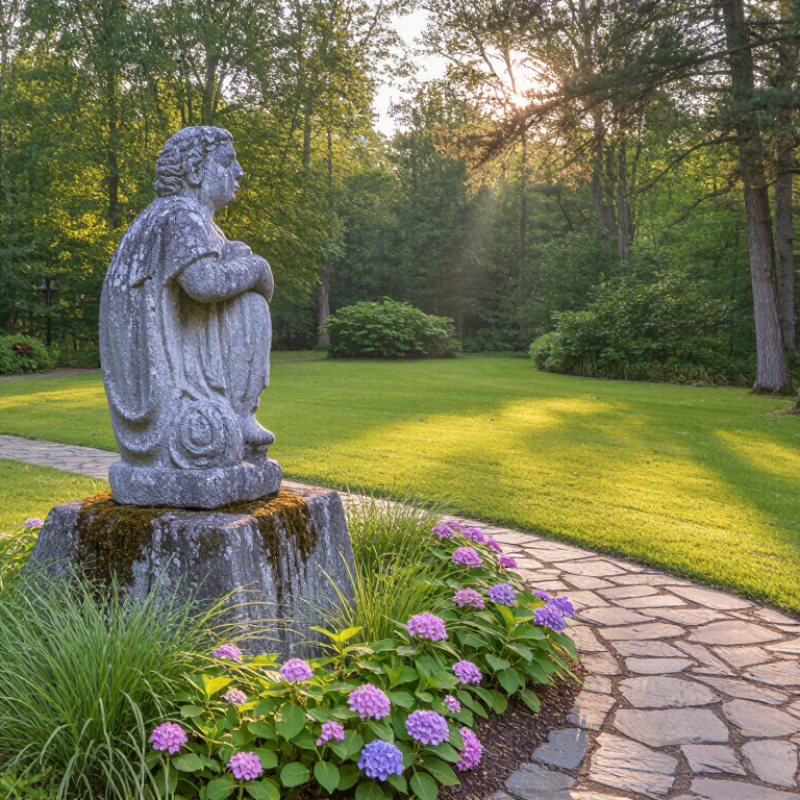
What Are Stone Garden Sculptures?
Stone garden sculptures are three-dimensional artworks made from natural or composite stone for outdoor display. Craftspeople may carve granite, limestone, marble, or sandstone by hand and machine. Each material has a different texture, weight, and response to weather. A granite bird may show crisp feathers for decades. Softer limestone often develops a gentler, weathered surface.
These sculptures can represent animals, people, fountains, columns, or abstract shapes. They add height and structure beside flower beds, paths, and quiet seating areas. Their visual effect changes with sunlight. Morning light can reveal shallow tool marks, while rain darkens the stone’s natural grain. I have found that scale matters more than many homeowners expect. A small statue may disappear near tall shrubs.
Durability depends on more than the stone itself. Good placement needs stable ground, safe clearance, and effective drainage. In freezing climates, trapped water may expand inside cracks. Moss can also make a shaded base slippery. Regular inspection helps identify chips, leaning, or open joints before damage spreads. The sculpture should not always look untouched. Weathering can add character, although heavy staining may signal poor drainage. I once underestimated how quickly nearby roots could disturb a pedestal. That mistake changed my approach to site planning. A carefully chosen stone sculpture can feel established, but its setting still needs practical attention.
Why Choose Stone Garden Sculptures for Outdoor Spaces? - What Are Stone Garden Sculptures?
| Evaluation Dimension | Granite | Marble | Limestone | Sandstone | Why It Matters Outdoors |
|---|---|---|---|---|---|
| What It Is | Coarse-grained igneous rock formed from slowly cooled magma. | Crystalline metamorphic rock formed when limestone is altered by heat and pressure. | Sedimentary rock composed primarily of calcium carbonate minerals. | Sedimentary rock made mainly from cemented sand-sized mineral grains. | Each stone type has a different appearance, hardness, porosity, and weathering response. |
| Typical Mohs Hardness | Approximately 6–7 | Approximately 3–5 | Approximately 3–4 | Approximately 6–7 when quartz-rich; softer varieties also occur | Harder stones generally resist scratching and surface abrasion more effectively. |
| Outdoor Durability | Very good resistance to abrasion, rain, and temperature changes when properly selected and installed. | Good structural durability, but the polished surface can dull and the stone may weather in acidic conditions. | Moderate; can gradually dissolve or weather in acidic rain and polluted environments. | Moderate to good, depending on grain bonding, porosity, and local freeze-thaw conditions. | Durability helps determine whether a sculpture remains stable and attractive over many seasons. |
| Water and Porosity Considerations | Usually low to moderate porosity, although fissures and mineral variation may occur. | Low to moderate porosity; porous varieties require careful sealing and maintenance. | Often porous and capable of absorbing water, especially when left unsealed. | Frequently porous; water absorption varies substantially between varieties. | Water absorption affects staining, freeze-thaw performance, algae growth, and cleaning requirements. |
| Resistance to Acidic Exposure | Generally good, though some minerals may react or discolor under particular conditions. | Lower resistance because calcium carbonate reacts with acids. | Low resistance because calcium carbonate reacts readily with acids. | Varies according to mineral composition and cementing material. | Areas exposed to acid rain, de-icing chemicals, or acidic soil may require more suitable stone selection. |
| Common Visual Character | Speckled crystals, strong color variation, and a substantial architectural appearance. | Veining, soft color transitions, and a refined decorative appearance. | Warm neutral tones, natural fossil patterns, and a softer rustic appearance. | Visible grains, layered textures, and earthy colors that blend naturally with planting. | Natural color and texture allow a sculpture to complement paths, planting beds, water features, and patios. |
| Recommended Finish | Flamed, honed, or textured finishes can provide a natural look and reduce visible wear. | Honed or matte finishes are often more practical outdoors than highly polished surfaces. | Honed, brushed, or naturally textured finishes help preserve a traditional garden character. | Natural cleft, sawn, or lightly textured finishes emphasize the stone’s grain. | Textured finishes can improve visual integration and may be less slippery than polished surfaces. |
| Maintenance Needs | Usually low; routine dust removal and periodic inspection are generally sufficient. | Moderate; clean with pH-neutral products and inspect for staining, etching, or surface wear. | Moderate to high; regular cleaning and suitable sealing may be needed in wet or polluted settings. | Moderate; remove organic growth and monitor for water-related deterioration. | Simple maintenance helps preserve the sculpture’s surface and reduces long-term restoration work. |
| Typical Cleaning Approach | Soft brush or low-pressure water with a pH-neutral cleaner. | Soft cloth or brush with a pH-neutral stone cleaner; avoid acidic products. | Gentle brushing and pH-neutral cleaning; avoid vinegar and other acidic cleaners. | Gentle brushing and low-pressure rinsing; avoid aggressive blasting that can remove grains. | Gentle cleaning protects the stone surface and prevents accidental etching or erosion. |
| Best Garden Applications | Large focal sculptures, entrance features, formal gardens, and high-traffic areas. | Decorative focal points, sheltered courtyards, classical settings, and low-impact garden zones. | Rustic gardens, Mediterranean-style landscapes, walls, and sheltered ornamental areas. | Naturalistic gardens, rock gardens, informal paths, and landscapes using earthy textures. | |
| Installation Considerations | Heavy weight requires a stable, level base and suitable lifting equipment for large pieces. | Protect from impact and confirm that the base can support the stone safely. | Use a well-drained foundation and avoid prolonged contact with standing water. | Provide good drainage and position the sculpture to reduce persistent moisture exposure. | Correct installation reduces tipping, cracking, staining, and movement caused by water or frost. |
| Primary Advantage | High hardness and strong resistance to everyday outdoor wear. | Distinctive veining and an elegant, sculptural appearance. | Warm, naturally weathered character that suits traditional landscapes. | Earthy texture and strong visual connection with rocks, soil, and planting. | Stone sculptures provide durable, low-energy garden accents made from a naturally varied material. |
| Potential Limitation | Large pieces can be extremely heavy, and some finishes may show mineral variation. | More vulnerable to scratching, etching, and acid-related surface damage. | More susceptible to staining, moisture absorption, and acid weathering. | Porosity and grain bonding can vary, affecting resistance to moisture and frost. | Understanding limitations helps match the sculpture to the site’s climate and maintenance plan. |