
Why Choose Stainless Carriage Bolts?

Choosing the right fastener can determine whether a project remains secure after years of rain, salt, and daily vibration. Stainless Carriage Bolts offer a practical combination of corrosion resistance, clean appearance, and dependable clamping strength. Their rounded heads also reduce snagging, while the square neck helps prevent rotation during tightening.

Corrosion specialist Herbert H. Uhlig defined corrosion as “the destructive attack of a metal by chemical or electrochemical reaction with its environment.” That principle explains why Stainless Carriage Bolts are useful in outdoor furniture, marine-adjacent structures, trailers, fencing, and timber construction. However, stainless steel is not magic. Grade selection still matters. Type 304 often suits general outdoor use, while Type 316 provides stronger resistance in coastal or chloride-rich environments.

The small details matter.

A damp timber joint can trap water beneath a bolt head. Dissimilar metals may create galvanic concerns. Excessive tightening can also cause galling, especially with stainless threads. Installers should match the bolt, nut, washer, and surrounding materials carefully. A washer can spread pressure across soft wood and reduce surface damage. Clean threads and controlled torque are equally important.

There is an uncomfortable point here: “stainless” does not mean maintenance-free. Poor drainage, contamination from carbon-steel tools, or incorrect installation can still produce staining and premature problems. Even the best Stainless Carriage Bolts need sensible design, suitable hardware, and periodic inspection. That honest limitation makes their advantages easier to evaluate.
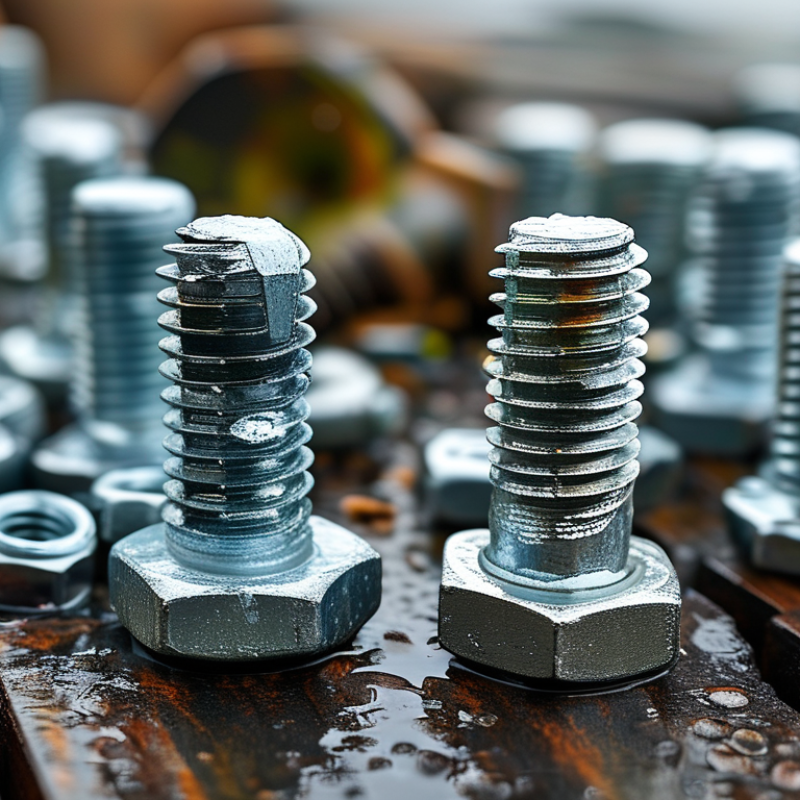
Why Choose Stainless Carriage Bolts?

What Are Stainless Carriage Bolts?

Stainless carriage bolts are fasteners designed to join materials while leaving a smooth, rounded head exposed. Unlike hex-head bolts, they have a square neck beneath the head. That neck presses into a matching hole and helps prevent the bolt from turning during tightening. The threaded end receives a nut, usually with a washer when the surface needs protection. Simple, but useful.

Most stainless carriage bolts use corrosion-resistant steel, making them practical for outdoor furniture, railings, signs, and light construction. Their resistance comes from a chromium-rich surface film that helps protect the metal when oxygen is present. This does not mean they never stain. Salt spray, trapped dirt, and contact with dissimilar metals can still cause discoloration or corrosion. In coastal work, I would inspect the joint more often than the label suggests. That judgment matters.

Installation is straightforward, but the hole size deserves attention. If the square neck cannot seat fully, the bolt may spin while the nut is tightened. If the hole is too tight, forcing the bolt can damage soft wood or thin sheet metal. Choose the diameter, length, thread style, and strength for the actual load. A stainless bolt can look substantial while being unsuitable for heavy structural tension. Checking the washer, nut, and mating materials is easy to overlook. I have found that small fitting errors cause more trouble than the bolt itself.

Why Choose Stainless Carriage Bolts? - What Are Stainless Carriage Bolts?

Data Dimension Stainless Carriage Bolt Information Practical Benefit
Basic definition A stainless carriage bolt is a threaded fastener with a smooth, rounded head and a square neck directly beneath the head. The square neck helps prevent the bolt from rotating while the nut is tightened.
Common stainless grades Type 304 stainless steel is widely used for general outdoor and indoor applications. Type 316 stainless steel provides improved resistance in marine, coastal, and chloride-rich environments. Material selection can improve service life where moisture, salt, or cleaning chemicals are present.
Corrosion resistance Stainless steel forms a protective chromium oxide film that helps resist atmospheric corrosion. Resistance is not unlimited and depends on exposure conditions. Suitable for many exterior, humid, and wash-down environments when the correct grade is selected.
Typical inch sizes 1/4-20, 5/16-18, 3/8-16, and 1/2-13 are common coarse-thread sizes. The first number indicates nominal diameter; the second indicates threads per inch. Coarse threads are convenient for general assembly and are commonly available in structural and woodworking hardware.
Typical metric sizes M6 × 1.0, M8 × 1.25, and M10 × 1.5 are common coarse metric thread sizes. The number after “M” is the nominal diameter in millimeters. Metric sizes provide compatibility with metric nuts, pre-drilled parts, and international equipment.
Head design The domed head has no exposed screwdriver or wrenching slot. Head diameter and height vary according to the applicable dimensional standard and bolt size. The finished surface is cleaner and less likely to snag clothing or equipment.
Neck geometry The square neck is designed to seat in a matching square hole, slot, or softer material such as wood. One-sided tightening is possible in many assemblies because the neck resists rotation.
Typical applications Wooden structures, outdoor furniture, decking components, fencing, playground assemblies, metal brackets, and general fabrication. The combination of a smooth appearance and anti-rotation neck suits visible assemblies and repeated outdoor use.
Strength consideration Austenitic stainless steels such as 304 and 316 generally offer excellent corrosion resistance but lower strength than many high-strength alloy-steel fasteners. Load requirements should be checked before substituting stainless bolts for high-strength structural fasteners.
Galvanic compatibility Contact with dissimilar metals, especially in the presence of moisture or salt, can create galvanic corrosion. Washers, insulating materials, sealants, or compatible metals may be used to reduce corrosion risk.
Installation guidance Use a nut and washer suited to the bolt material. Avoid excessive tightening, and consider an anti-seize compound formulated for stainless fasteners. Proper installation helps reduce thread galling, surface damage, and loss of clamping performance.
Key selection checks Confirm diameter, thread type, length, head and neck dimensions, stainless grade, nut compatibility, and required load capacity. Correct specifications improve fit, durability, safety, and resistance to premature failure.

Note: Exact dimensions, mechanical properties, and allowable loads depend on the applicable fastener standard, material condition, size, and manufacturer’s specification.

How Stainless Steel Improves Carriage Bolt Performance

Why Choose Stainless Carriage Bolts?

Stainless steel improves carriage bolt performance by slowing corrosion at the surface. Its chromium content forms a thin, self-repairing oxide layer after exposure to air. This matters on outdoor frames, wet decks, and washdown equipment. A bolt that keeps its bearing surface intact is easier to remove later. It also maintains more reliable clamping than heavily rusted carbon steel.

The NACE IMPACT study estimated global corrosion costs at about US$2.5 trillion annually, equal to roughly 3.4% of global economic output. It also reported that nearly 25% of corrosion costs could be avoided through better prevention practices. Stainless fasteners support that approach, but material selection still matters. Grade 304 suits many ordinary atmospheric environments. Grade 316 offers better resistance where chlorides, salt spray, or coastal moisture are present. ISO 9223 classification can help engineers assess atmospheric corrosivity before choosing a grade.

Small details matter. Keep threads clean. Avoid mixing incompatible metals. Stainless threads can gall under excessive torque, especially during fast installation. A suitable lubricant and controlled tightening can reduce that risk. ASTM fastener standards also distinguish mechanical properties, not only corrosion resistance. The choice is not flawless. Stainless steel can suffer crevice corrosion beneath dirt, washers, or trapped moisture. In field inspections, this hidden gap is often more important than visible surface shine. A clean joint, correct grade, and realistic exposure assessment usually improve carriage bolt service life more than appearance alone.

Key Features and Design Advantages

Why Choose Stainless Carriage Bolts?

Key Features and Design Advantages

Stainless carriage bolts combine corrosion resistance with a practical fastening design. Their rounded heads leave fewer sharp edges on exposed surfaces. This matters on walkways, outdoor frames, and equipment panels. The square neck below the head helps prevent rotation during tightening. One tool can often secure the nut from the opposite side.

In practical assembly work, the smooth head creates a cleaner appearance than hex-head hardware. Stainless steel also withstands moisture, humidity, and frequent cleaning better than ordinary carbon steel. That makes these bolts useful for marine fittings, garden structures, food-service areas, and exterior repairs. The result is clean. A properly fitted bolt can also reduce snagging on clothing or cables.

However, stainless carriage bolts are not automatically the best choice for every load. Their strength varies by material grade, diameter, and manufacturing quality. Fit still matters. I have seen installations fail because the square neck was too short for the material thickness. Check the hole size, grip length, washer position, and tightening torque before installation. Avoid forcing a bolt into a poorly aligned hole. That shortcut may damage the threads or weaken the joint. Stainless hardware can also gall during tightening, especially under excessive torque. Slow tightening and suitable assembly practices help prevent this problem. The design is simple, but careful selection makes its advantages reliable.

Common Applications for Stainless Carriage Bolts

Stainless carriage bolts suit applications requiring clean appearance, secure fastening, and resistance to moisture. Their domed heads reduce snagging on timber, sheet metal, and public-use equipment. The square neck grips the material, limiting rotation during nut tightening. Common applications include outdoor decking, handrails, playground structures, solar frames, HVAC supports, and food-processing equipment. Grade 304 handles many general environments. Grade 316 is usually better near saltwater because molybdenum improves chloride resistance.

Demand reflects stainless steel’s broad industrial role. The International Stainless Steel Forum reported approximately 58.4 million tonnes of stainless crude steel production in 2023. NACE International’s IMPACT study estimated global corrosion costs at about 3.4% of worldwide GDP. These figures support corrosion-conscious fastening, but they do not make stainless carriage bolts suitable everywhere. Poor drainage, trapped salt, or contact with dissimilar metals can still cause staining and galvanic corrosion. That limitation is easy to overlook.

Tips: Match the bolt grade to the environment. Use compatible washers and nuts. Keep threads clean and avoid excessive tightening, which can cause galling. A torque wrench helps. For coastal installations, inspect hidden joints periodically. I would not assume “stainless” means maintenance-free; site exposure, surface damage, and installation quality still deserve practical review. ASTM F593 provides relevant requirements for stainless steel bolts, screws, studs, and machine screws used in demanding assemblies.

Why Choose Stainless Carriage Bolts?

Common applications ranked by typical suitability for stainless carriage bolts

Stainless carriage bolts are commonly selected where corrosion resistance, a smooth finished head, and secure fastening are important. The suitability score is a practical guide from 1 to 5, based on typical environmental exposure and the common use of stainless steel fasteners. Grade 304 is widely used for general outdoor and food-related applications, while Grade 316 is preferred for coastal, marine, and high-chloride environments.

How to Choose the Right Stainless Carriage Bolt

Why Choose Stainless Carriage Bolts? How to Choose the Right Stainless Carriage Bolt

Stainless carriage bolts provide a clean, secure fastening method. Their square neck resists rotation inside timber, sheet metal, or slotted frames. The domed head also reduces snagging and gives outdoor assemblies a finished appearance. However, stainless does not mean universally strong. A common mistake is choosing by appearance alone.

Start with the environment and load. A2 stainless, similar to 304, suits indoor areas and ordinary outdoor exposure. A4 stainless, similar to 316, performs better near saltwater, chlorides, and chemical splash. Check diameter, thread length, and grip thickness carefully. The bolt should pass through every layer, while leaving enough thread for full nut engagement. ISO 3506-1 provides mechanical property requirements for stainless fasteners. ASTM F593 also covers stainless steel bolts, screws, studs, and other externally threaded fasteners. These standards matter more than casual online specifications. World Stainless reported 58.4 million metric tons of crude stainless production in 2023, yet material availability does not remove the need for correct grade selection.

Tips: Measure the clamped materials before ordering. Match the nut and washer grade where possible. Apply suitable anti-seize compound to reduce thread galling. Do not force a dry stainless nut at high speed. It may seize suddenly. For structural loads, verify the certified strength and consult an engineer. My own selection rule needs revision: corrosion resistance is valuable, but joint design still controls performance.

Facebook Twitter Instagram Linkedin Youtube