
Blog
What Is a Walkie Pallet Jack and How Does It Work?
A Walkie Pallet Jack is a powered material-handling tool designed to move palletized loads across warehouse floors. The operator walks behind or beside the machine and uses a handle to steer, lift, and travel. Its electric drive reduces the pushing and pulling required with a manual pallet jack. It is commonly used in stockrooms, loading areas, and retail backrooms where loads travel short distances. Compact size helps in narrow aisles. It is not a forklift, though, and it is not suited to every load or surface.
The machine works through a few connected systems. Forks slide beneath a pallet, and an electric lift mechanism raises the load enough to move it. A motor drives the wheels, while the tiller handle controls direction and travel. Exact controls, rated capacity, and braking behavior vary by model, so the manufacturer’s instructions matter. Simple, at first glance. But that simplicity can invite overconfidence. Operators still need to check pallet condition, load stability, floor clearance, and the route ahead. Battery charge and regular maintenance also affect reliable operation. This guide explains the main components, operating sequence, common applications, and practical limits of a Walkie Pallet Jack, with attention to details that can be easy to overlook during a busy shift.
What a Walkie Pallet Jack Is
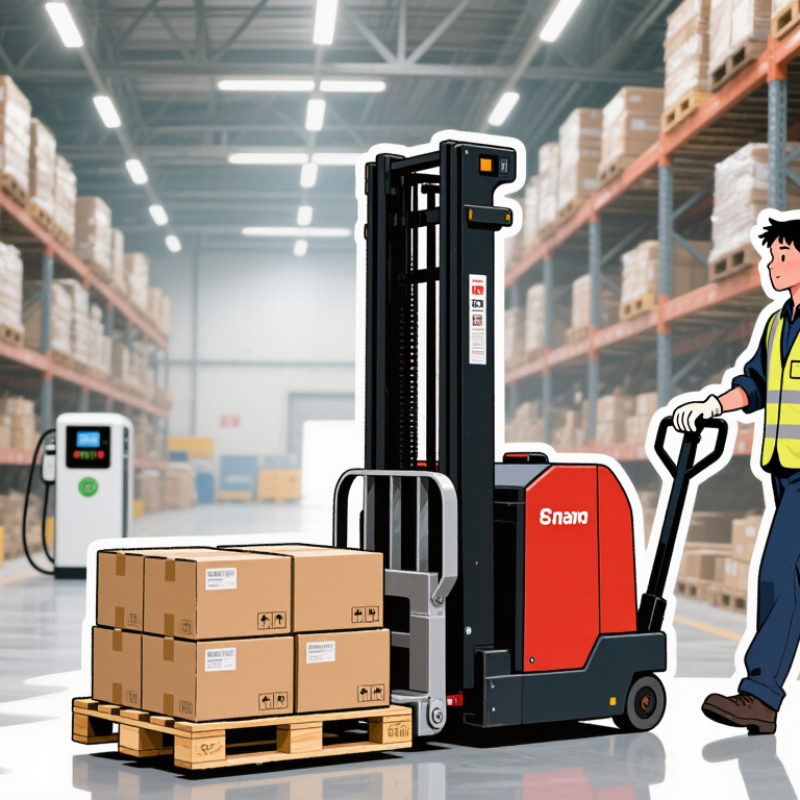
A walkie pallet jack is a powered tool for moving palletized goods across a warehouse, loading area, or stockroom. The operator walks behind or beside it instead of riding on the machine. Its two forks slide into the pallet openings, while small wheels support the load. A control handle, often called a tiller, helps steer and operate the jack. Compact and practical.
Most models use an electric motor to move the jack and raise or lower its forks. The operator guides it at walking pace, then positions the forks beneath a pallet. A stable load and clear travel path matter; even a short move can feel awkward in a tight aisle. This equipment is intended for moving loads, not lifting them to high storage levels. Capacity and controls vary by model, so the equipment label and manual are useful references.
Tips: Check that the pallet is undamaged and the load sits evenly before moving. Keep the forks low while travelling, and slow down near corners or people. Leave room to turn. One detail that is easy to overlook: uneven floors can make a loaded jack harder to control, so inspect the route as well as the pallet.