
China Best Smart Door Lock Suppliers for Global Buyers

Choosing the right Smart Door Lock supplier requires more than comparing prices, app features, or polished product photos. Global buyers need dependable hardware, clear communication, stable production, and evidence of long-term quality. A strong supplier should explain its cylinder design, encryption methods, battery performance, emergency access, and manufacturing controls without hiding technical limitations.

Bruce Schneier, a respected security technologist, famously said, “Security is a process, not a product.” His warning applies directly to connected door locks. A reliable Smart Door Lock must support secure firmware updates, controlled user permissions, audit records, and practical recovery methods. It should also perform consistently in real settings, from humid apartments to busy hotel corridors. Small details matter. A loose thumb-turn does.

This guide examines leading Smart Door Lock suppliers for global buyers, focusing on product engineering, customization, testing, certifications, after-sales service, and supply-chain reliability. It considers both established manufacturers and specialized factories serving residential, commercial, rental, and hospitality markets. However, no supplier is perfect. Factory claims may sound stronger than the available evidence, and one successful sample cannot prove years of performance. Buyers should request test reports, inspect production procedures, verify software support, and clarify warranty responsibilities before signing contracts. That extra work feels slow. It can prevent expensive surprises later. The best supplier is not always the cheapest or most famous. It is the partner that combines secure design, honest documentation, responsive service, and measurable manufacturing experience.
China Best Smart Door Lock Suppliers for Global Buyers

Understanding China’s Smart Door Lock Supplier Market

China’s smart door lock supplier market is broad, capable, and difficult to compare from catalogs alone. Fortune Business Insights estimated the global smart lock market at about USD 2.5 billion in 2023, with strong growth expected through 2032. This demand has encouraged Chinese factories to expand beyond basic keypad models. Many now offer fingerprint readers, temporary access codes, mobile control, and mechanical backup systems.

The supplier landscape has several layers. Some factories design core hardware, while others assemble products around purchased modules. That difference matters. A polished sample may not represent stable mass production. Buyers should inspect production records, firmware update procedures, battery testing, and quality-control checkpoints. Intertek and TÜV-style test reports can support evaluation, but a certificate alone is not proof of consistent manufacturing. Small details matter.

China’s export strength also comes from flexible customization. Suppliers can adjust mortise sizes, packaging, languages, and access methods for different housing markets. However, customization may increase tooling costs and delay certification work. The market is not perfectly transparent. A low quotation can hide weaker sensors, limited after-sales support, or unclear software ownership. I would request ten to twenty production samples before placing a large order. That approach feels slow, but it reveals repeated failures that one sample cannot show. Industry forecasts are useful, yet they should not replace factory audits, traceable testing, and direct technical discussions.

Exploring Smart Door Lock Types and Core Security Technologies

China Best Smart Door Lock Suppliers for Global Buyers

Smart door locks now combine mechanical protection with digital access control. MarketsandMarkets valued the global smart lock market at about USD 2.3 billion in 2023. It projects growth to approximately USD 4.4 billion by 2028. This growth makes supplier evaluation more important for global buyers. Common access types include fingerprint recognition, PIN codes, RFID cards, mobile Bluetooth, and Wi-Fi control. Fingerprint sensors offer speed, but wet or damaged fingers can reduce accuracy. PIN access is convenient. It also creates risks when users choose simple numbers.

Core security depends on more than an attractive mobile application. Look for encrypted communication, secure elements, signed firmware, and protected administrator accounts. TLS encryption should protect cloud connections. Local Bluetooth commands should also use strong authentication. The National Institute of Standards and Technology recommends phishing-resistant and carefully managed digital authentication practices in its Digital Identity Guidelines, SP 800-63B. These principles matter when reviewing remote access features. Ask suppliers for penetration-test summaries, vulnerability response procedures, and update-support periods.

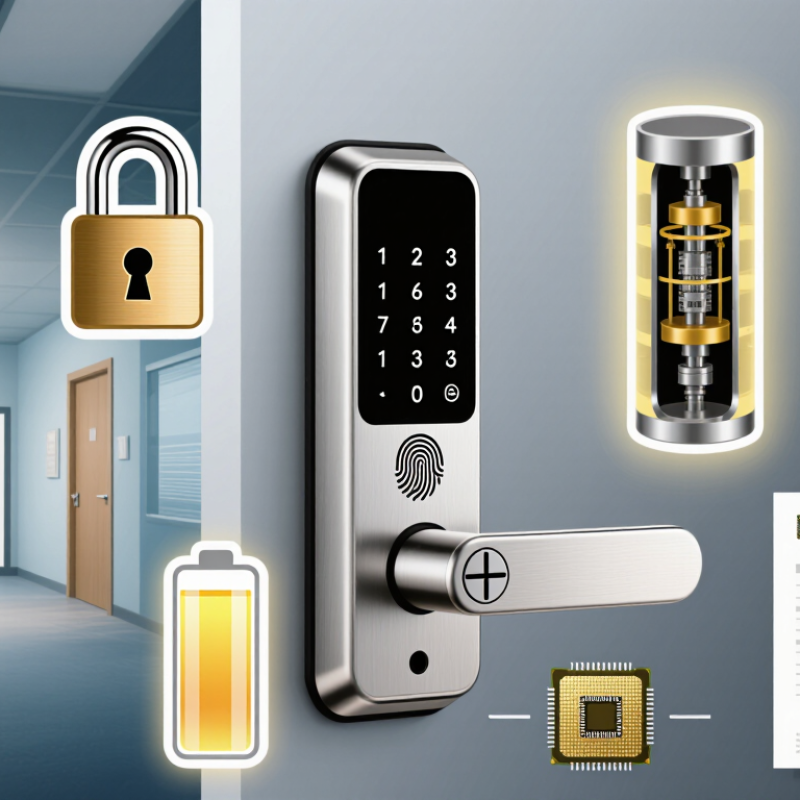
Mechanical performance still matters. Check cylinder quality, deadbolt strength, emergency power access, and tamper alarms. Standards such as ANSI/BHMA and EN 14846 can support more consistent testing, depending on the target market. However, certification labels need verification. A glossy app is not proof of strong security. Some products collect more user data than buyers expect. Suppliers should explain storage locations, deletion controls, and audit-log retention. No lock is perfect. Global buyers should test failure scenarios, including drained batteries, lost phones, weak network signals, and repeated incorrect fingerprints, before approving a large order.

China Best Smart Door Lock Suppliers for Global Buyers - Exploring Smart Door Lock Types and Core Security Technologies

Smart Door Lock Type and Security Technology Comparison for Global Buyers
Category Smart Lock Type / Technology How It Works Core Security Features Typical Application Buyer Evaluation Points
Lock Construction Smart Deadbolt Replaces or operates a standard deadbolt through a motorized thumb-turn or exterior keypad. Automatic locking, mechanical key override, incorrect-code lockout, tamper alarm, and encrypted wireless communication. Residential apartments, villas, rental homes, and retrofit projects. Confirm door thickness, backset, deadbolt dimensions, handing, cylinder compatibility, and emergency egress requirements.
Lock Construction Mortise Smart Lock Integrates the electronic reader, motor, latch, and deadbolt into a mortise case installed inside the door edge. Multi-point engagement options, anti-pick cylinder options, audit trails, access scheduling, and concealed wiring. Hotels, offices, high-end residences, and institutional buildings. Verify mortise case dimensions, spindle position, door preparation, fire-door compatibility, and local egress codes.
Lock Construction Smart Lever Handle Combines a lever handle and electronic access reader in one unit, usually with a spring latch. PIN authentication, RFID or NFC credentials, passage mode, privacy mode, and low-battery warning. Interior rooms, offices, serviced apartments, and light commercial doors. Check latch size, spindle dimensions, door opening direction, handle height, and accessibility requirements.
Credential Method PIN Code Access A user enters a programmed numeric code on a touch keypad or physical keypad. Temporary codes, one-time codes, failed-attempt lockout, anti-peep input, and administrator permissions. Short-term rentals, family homes, offices, and shared facilities. Review code length, code capacity, offline operation, event storage, and protection against shoulder surfing.
Credential Method Fingerprint Recognition A biometric sensor captures fingerprint features and compares them with locally stored templates. Liveness detection, template protection, local matching, failed-scan limits, and alternative credentials. Residential entrances, staff-only areas, and small commercial premises. Ask for performance data under wet, dry, dirty, or damaged-finger conditions and confirm privacy compliance for biometric data.
Credential Method RFID / NFC Access A card, key fob, or compatible mobile credential is read through short-range radio communication. Encrypted credential storage, revocation, anti-cloning measures, access levels, and event logging. Hotels, offices, student housing, and multi-tenant buildings. Identify the supported frequency and credential technology, card-security method, reader range, and system interoperability.
Connectivity Bluetooth Low Energy A nearby smartphone communicates directly with the lock using low-power wireless connectivity. Encrypted pairing, device authentication, digital keys, permission control, and offline credential support. Residential use, offices, and access points where local phone control is sufficient. Test phone compatibility, pairing recovery, range, key sharing, battery impact, and operation without cloud access.
Connectivity Wi-Fi or Gateway-Connected Lock The lock connects directly to Wi-Fi or communicates with a nearby gateway for remote management. TLS-protected communication, role-based accounts, remote revocation, activity alerts, and firmware updates. Property management, remote monitoring, vacation rentals, and connected home systems. Confirm supported Wi-Fi bands, gateway requirements, cloud-region availability, data ownership, subscription terms, and offline fallback.
Core Cybersecurity Secure Firmware and Updates The lock verifies firmware integrity during startup and receives authenticated software updates. Secure boot, signed firmware, encrypted update delivery, rollback protection, and vulnerability-response procedures. All connected smart lock categories, especially remotely managed installations. Request a software-support period, update policy, vulnerability-reporting channel, penetration-test summary, and end-of-support process.
Physical Security Tamper and Forced-Entry Protection Sensors identify abnormal movement, repeated credential failures, enclosure opening, or forced rotation. Tamper alarms, hardened escutcheons, anti-drill components, clutch mechanisms, mechanical override, and event records. Exterior doors, commercial entrances, and high-traffic access points. Check independent durability testing, cylinder resistance, latch strength, IP rating, temperature range, and local building-code compliance.
Power and Reliability Battery-Powered Smart Lock Rechargeable or replaceable batteries power the motor, reader, processor, and wireless module. Low-battery alerts, emergency external power, mechanical override, battery protection, and retained access settings. Retrofit residential installations and doors without existing low-voltage wiring. Compare battery chemistry, claimed cycle life, standby consumption, emergency power interface, operating temperature, and serviceability.
Global Buyer Compliance Checklist
Confirm applicable regional requirements for fire doors, emergency exit hardware, accessibility, radio equipment, electrical safety, data protection, and cybersecurity. Product performance, battery life, IP rating, encryption, and certification status should be verified from current technical documentation and independent test reports rather than marketing claims alone.

Evaluating Supplier Quality, Certifications, and Manufacturing Capacity

Choosing China’s best smart door lock suppliers requires more than comparing prices or product photos. MarketsandMarkets valued the global smart lock market at about USD 2.4 billion in 2023 and forecasts strong growth through 2028. This expansion increases supplier choices, but quality differences remain significant.

A reliable audit should verify ISO 9001 quality systems, production traceability, and documented final inspections. For export markets, ask whether products meet relevant standards, such as EN 14846, ANSI/BHMA requirements, or ETSI EN 303 645 for consumer IoT security. Certificates must show the exact model, testing scope, and issuing laboratory. A certificate is not proof of every batch.

Look closely at the factory floor. Check monthly capacity, assembly-line balance, battery testing, lock-cycle testing, and failure records. A supplier claiming 100,000 units monthly should show purchase records, staffing levels, and finished-goods storage. The China Manufacturing Purchasing Managers’ Index remained near the expansion threshold during several 2024 months, reminding buyers that capacity can shift with orders and market pressure.

Ask for samples from different production dates. Test fingerprint recognition with wet fingers, low batteries, and repeated access attempts. Review firmware-update controls and data protection procedures. NIST’s IoT cybersecurity guidance emphasizes device identity, secure updates, and vulnerability management. Some suppliers perform well in demonstrations but provide weak documentation. That gap matters. Evaluate it carefully.

China Best Smart Door Lock Suppliers for Global Buyers

Evaluating Supplier Quality, Certifications, and Manufacturing Capacity

This illustrative buyer-assessment benchmark uses a 100-point weighting model. Quality management and product compliance are emphasized because international buyers commonly verify ISO 9001, applicable CE or FCC requirements, RoHS compliance, and relevant lock performance standards such as EN 14846. Manufacturing capacity reflects production scalability, quality-control processes, testing capability, and export readiness rather than any specific company or brand.

Comparing OEM, ODM, MOQ, Pricing, and Customization Options

China Best Smart Door Lock Suppliers for Global Buyers

The smart lock market is expanding quickly. Grand View Research valued it at about USD 2.6 billion in 2023. Its report forecasts a 19.6% compound annual growth rate through 2030. This growth makes supplier selection more critical. OEM programs suit buyers with fixed designs and established apps. ODM programs offer tested structures, firmware, and faster development. However, shared software can limit long-term differentiation.

MOQ changes with the production plan. Standard models may require several hundred units, while custom housings, fingerprint modules, or new packaging can require higher volumes. Pricing should include tooling, samples, firmware changes, testing, packaging, and shipment. A low factory quote can become expensive after customization. For example, adding a zinc-alloy body, emergency power port, and mobile access system affects both unit price and certification work. The Connectivity Standards Alliance reports that interoperability remains important for smart-home adoption, yet compatibility is still imperfect. That detail deserves attention.

Tips: Request a sample before negotiating volume. Ask for the bill of materials, warranty process, software update policy, and test reports. Confirm whether the supplier owns the firmware or uses licensed components. Check door thickness, latch dimensions, climate resistance, and battery performance. Do not assume an ODM platform is fully ready for every market. Some integration work usually remains. Include acceptance criteria in the purchase contract, especially for biometric accuracy, app stability, and offline unlocking.

Managing Quality Control, Shipping, and Import Procedures

China Best Smart Door Lock Suppliers for Global Buyers

Reliable sourcing begins with measurable quality control. Request a written specification covering body materials, unlocking methods, battery life, emergency access, and firmware updates. A pre-production sample should pass repeated locking cycles, keypad tests, fingerprint tests, and low-battery alarms. Factory inspections should verify dimensions, packaging, labels, manuals, and accessories against the approved sample. Small errors matter. Record serial numbers and test results for every batch. No checklist is perfect, so buyers should review recurring defects rather than hiding them.

Shipping and import planning need equal attention. The World Bank’s Logistics Performance Index 2023 evaluates 139 economies across customs, infrastructure, shipment quality, tracking, and delivery timeliness. This highlights why a low factory price cannot compensate for weak logistics coordination. UNCTAD’s Review of Maritime Transport reports that over 80% of global merchandise trade by volume moves by sea. Confirm the HS code, Incoterm, carton dimensions, insurance responsibility, and destination documentation before production. Import requirements may include electrical safety, radio equipment, cybersecurity, language, and battery-related declarations. Requirements differ by market.

Tips: Ask suppliers for a commercial invoice, packing list, certificate of origin, test reports, and export records. Use an independent inspection company when order value is significant. Check whether the product description matches customs documents exactly. I would also budget for port storage and inspection delays. That cost is often overlooked.

Facebook Twitter Instagram Linkedin Youtube