
Top 10 Scaffolding Equipment Manufacturers in China

China’s scaffolding market spans large export-oriented factories and specialist producers. This guide to the Top 10 scaffolding equipment Manufacturers in China gives buyers a practical starting point. It considers product range, manufacturing capability, quality controls, customization, and export experience. These factors matter when comparing frames, couplers, props, and steel or aluminum platforms. A polished catalog is useful, but it cannot tell you how a connection feels during assembly or how consistently parts fit across a delivered batch.

Safety deserves more than a checkbox. British safety expert Sir Brian Appleton is often quoted as saying, “Safety is not an intellectual exercise to keep us in work. It is a matter of life and death.” That principle is highly relevant to scaffolding, where load capacity, stable bases, secure guardrails, and clear inspection records affect real crews. Ask manufacturers for product specifications, test documentation, material details, and evidence of quality procedures. Then compare those records with the needs of your project and local requirements. Details matter.

This list is a guide, not a substitute for technical review. No ranking is perfect. Supplier claims can be hard to compare, and a low quotation may leave important details unanswered. Consider sample inspection, communication, lead times, packaging, and after-sales support alongside price. The best choice is not always the biggest factory. It is the manufacturer whose equipment and documentation match the job, and whose answers remain clear when you ask difficult questions. A little skepticism is healthy.
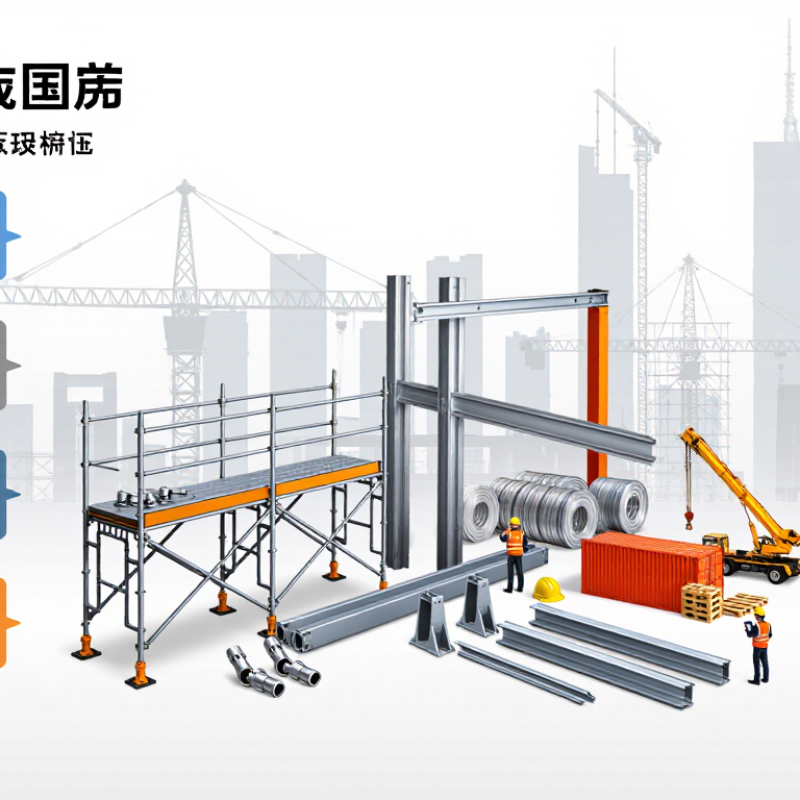
Top 10 Scaffolding Equipment Manufacturers in China

China’s Scaffolding Equipment Industry and Main Product Categories

China’s scaffolding equipment industry serves housing, transport, energy and industrial projects. The National Bureau of Statistics’ 2023 Statistical Communiqué puts construction-enterprise output at 31.59 trillion yuan, up 5.8% year on year. This signals a large construction base, not scaffold sales. That distinction matters. Demand depends on project type, height, access conditions and reuse cycles. A tower block may need dense façade access, while a bridge deck needs stable support below.

Main product categories include frame scaffolds, modular ringlock and cuplock systems, tube-and-coupler sets, suspended platforms, and formwork shoring. Frame units suit repetitive façades and can be assembled quickly. Modular systems connect standards, ledgers and braces through rosettes or cups. Crews still need to check pins, welds and base-jack adjustment. Tube-and-coupler equipment adapts to irregular structures, but setup takes longer and relies on skilled fitting. Shoring towers support wet concrete; load plans and bracing are essential. Small parts matter. Steel or aluminum affects handling, corrosion resistance and cost. Product labels alone do not establish suitability. Check dimensions, rated loads and inspection records against site conditions. Market estimates also vary because some reports group scaffolding with broader access equipment.

EN 12811-1 defines six service load classes for scaffold platforms. The values shown are uniformly distributed loads in kN/m². They are a standards-based reference, not manufacturer-specific ratings or market-share data; actual use must follow applicable local requirements and project design.

Criteria for Identifying Leading Chinese Manufacturers

Selecting a scaffolding equipment manufacturer in China requires more than comparing catalog prices. Request material certificates, test reports, and a clear explanation of the standards each product is designed to meet. Check that documents identify the relevant product type and match the components in your quotation. A mismatch matters. Small detail, big signal.

Review how quality is controlled on the production floor. Ask how incoming steel is checked, welds are inspected, and dimensions are recorded. For coated parts, request details about surface preparation and coating checks. Where applicable, examine load-test procedures and the laboratory issuing reports. A factory visit or independent audit can help verify that documented processes are used in practice. Look closely at a sample: frames should sit square, pins should move freely, and couplers should fit without excessive force.

Capacity is only useful if orders remain consistent. Ask about batch traceability, production scheduling, packaging, and how defects or delayed shipments are handled. Evaluate technical support, replacement-part availability, and the clarity of assembly instructions. Compare total delivered cost rather than unit price alone. No checklist is perfect. A polished audit can miss everyday variation, so a trial order may reveal more about fit, finish, and communication than another sales presentation.

Top 10 Scaffolding Equipment Manufacturers in China

Criteria for Identifying Leading Chinese Manufacturers

No. Evaluation Criterion Suggested Weight Evidence to Review Why It Matters
1 Product range and system compatibility 14% Product catalogue, component specifications, connection details, and compatibility information for frames, tubes, couplers, props, and system scaffolds. A well-documented range helps buyers select components suited to the project and avoid unsafe or unsuitable combinations.
2 Material specification and traceability 13% Material certificates, grade and dimensional specifications, incoming-inspection records, and batch or heat-number traceability. Verifiable material information supports consistent product quality and helps link finished components to their source materials.
3 Manufacturing quality control 13% Documented inspection procedures, production checks, calibration records, nonconformance handling, and final inspection reports. Consistent process controls reduce variation in dimensions, welds, finishes, and component fit.
4 Engineering and load-performance documentation 12% Applicable design calculations, test reports, stated load limits, configuration guidance, and clear identification of the conditions covered by each document. Scaffold capacity depends on the system configuration and site conditions; documented engineering supports safe design and use.
5 Compliance and certification transparency 10% Current certificates and test reports, issuing-body details, scope, product coverage, and confirmation that documents apply to the offered products. Checking the scope and validity of documentation helps buyers distinguish relevant evidence from general or unrelated certificates.
6 Welding and fabrication capability 10% Welding procedures, welder qualification records where applicable, weld inspection practices, fabrication samples, and production-process descriptions. Fabrication quality can affect the strength, fit, and service life of load-bearing scaffold components.
7 Corrosion protection and finish control 9% Surface-treatment specifications, coating or galvanizing inspection records, coating-thickness measurements where applicable, and maintenance guidance. Appropriate protection can help limit corrosion during storage and use; performance depends on the environment and maintenance.
8 Production capacity and delivery reliability 7% Production planning information, capacity evidence, lead-time commitments, order records, packaging procedures, and shipment documentation. Reliable planning helps buyers coordinate project schedules and manage large or phased orders.
9 After-sales and technical support 6% Installation and use instructions, technical-response arrangements, spare-parts availability, complaint procedures, and warranty terms. Clear support channels help resolve specification, handling, and product-service questions throughout the purchasing cycle.
10 Export documentation and communication 6% Product data sheets, packing lists, shipping documents, export experience evidence, response times, and ability to provide documentation in the required language. Complete documentation and clear communication help reduce avoidable delays and misunderstandings in cross-border procurement.
Total suggested evaluation weight 100% Use the same evidence requirements and scoring method for every candidate manufacturer.

This is a manufacturer-selection framework, not a ranking of named companies. Suggested weights are evaluation-model values, not independently verified market statistics. Buyers should verify product-specific documents and assess scaffold design and use in accordance with applicable local requirements.

Profiles of the Top 10 Scaffolding Equipment Manufacturers in China

Profiles of the Top 10 Scaffolding Equipment Manufacturers in China

These ten profiles show how manufacturers can differ in product focus and production capacity. The first profile centers on modular steel frames for general construction. Buyers should check weld consistency and protective coating thickness. The second focuses on ringlock systems, valued for flexible connections on complex sites. Its fittings still need careful inspection. The third produces aluminum scaffolding for lighter access needs. Confirm load ratings before specifying it. The fourth offers cuplock components for repetitive work. Ask about compatibility across batches. The fifth combines scaffold tubes, couplers, and frames, which may simplify sourcing but requires clear quality records.

Tips: Request current test reports, sample components, and written load data. Compare packing details, too. Small omissions matter.

The sixth profile specializes in mobile towers, where wheel locks and platform access deserve attention. The seventh supplies suspended-access equipment; confirm the intended configuration with a qualified engineer. The eighth focuses on formwork support and heavy-duty shoring. Capacity tables should match actual site conditions. The ninth serves export orders with customized dimensions, though customization can extend lead times. The tenth offers broad product ranges and one-stop purchasing. That convenience is useful, but a wide catalog alone does not prove consistent quality. Compare specifications, traceability, and after-sales support rather than relying on rankings alone.

Comparison of Products, Certifications, and Manufacturing Capabilities

Top 10 Scaffolding Equipment Manufacturers in China

Comparing manufacturers means looking beyond catalog photos. Ringlock systems suit complex layouts, while frame scaffolds can be practical for repetitive façade work. Tube-and-coupler products offer flexibility, but assembly takes more time. Fit matters.

Check the actual product range, including standards, ledgers, braces, base jacks, and access ladders. Ask for load tables and dimensional drawings for the specific configuration. A broad catalog does not prove that every component is made in-house. Small detail, big difference.

Certifications need careful review. ISO 9001 can indicate a quality management system, but it does not certify each scaffold component. For product compliance, request relevant test reports and confirm their scope, issuing body, and model numbers. Verify that documents match the products being quoted. Do not rely on a logo alone.

Manufacturing capability shows up in measurable details: steel grade traceability, weld inspection, dimensional checks, and galvanizing records. Ask how often samples are tested and how production batches are identified. A stated monthly capacity is useful, but only alongside staffing, machinery, and inspection records. Factory audits can help, though a single visit cannot show every shift or process. Comparisons are imperfect; documentation may look neat while actual tolerances still vary. Check samples against drawings before placing a large order.

Key Factors in Choosing a Scaffolding Equipment Manufacturer

Choosing among scaffolding equipment manufacturers in China starts with evidence, not catalogue photos. The U.S. Bureau of Labor Statistics reported 1,075 fatal work injuries in construction in 2023. That figure is not specific to scaffolding, but it underlines why load capacity, stable connections, and consistent production matter. Ask for test reports tied to the exact frame or component you plan to buy. Check material certificates, weld inspection records, and batch traceability. A neat brochure is not proof.

Factory audits should examine real production, not only the showroom. Look at how tubes are cut, welds are checked, and finished parts are protected from corrosion. Request samples and compare dimensions across several pieces; small mismatches can complicate assembly on site. Confirm that the manufacturer can supply replacement parts and clear installation guidance. Ask which standards the equipment is tested against, and verify that they match the requirements of your project’s destination market. Details matter.

Price still matters, of course. But a low quote may omit testing, packaging, or after-sales support. Compare complete quotations and delivery schedules, then ask for references from projects with similar loads and site conditions. Paperwork can look better than the product. It is worth checking both.

Facebook Twitter Instagram Linkedin Youtube