
Blog
What Is Hybrid Flooring and Is It Waterproof?
Hybrid Flooring is often presented as a practical answer to busy homes, where wet shoes, spilled drinks, and muddy paws meet hard-working floors. It typically combines a decorative surface, a rigid core, and an attached or separate underlay. The exact construction varies by product. That matters.
Grand View Research valued the global resilient flooring market at approximately US$38.6 billion in 2023 and forecast growth through 2030. This category includes several flooring types, not Hybrid Flooring alone, so the figure should not be read as a hybrid-flooring market estimate. It does, however, show the scale of demand for resilient surfaces. The report is useful context, not proof that every product performs equally.
Is Hybrid Flooring Waterproof? Some products are designed to resist surface water, but “waterproof” does not guarantee protection from leaks, standing water, or moisture trapped beneath the floor. Installation details matter. So do the manufacturer’s tested claims, warranty exclusions, and instructions for sealing edges and cleaning spills. A board may survive a splash while the subfloor remains vulnerable.
This guide explains how hybrid planks are built, what waterproof claims can reasonably mean, and which product details to check before buying. A named industry expert’s direct quotation cannot be responsibly included without a verifiable source; no expert quote or supporting article was provided. That gap deserves attention, rather than a polished but invented quotation.
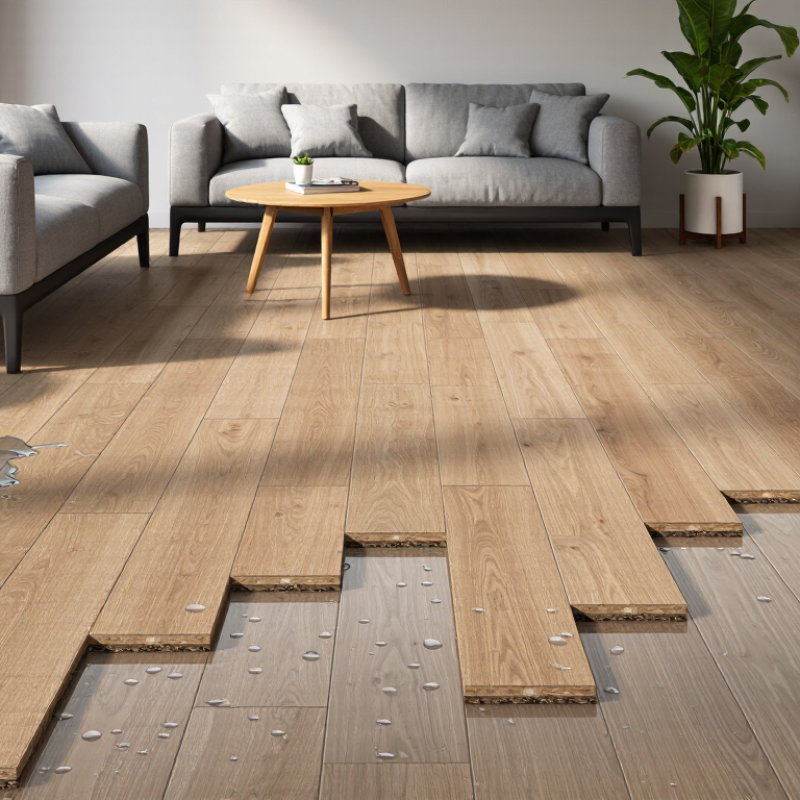
What Hybrid Flooring Is and How It Is Made
Hybrid flooring is a layered floor covering designed to combine a realistic decorative surface with a firm, water-resistant core. The term is not perfectly precise: construction differs between products, so checking the product specification matters. Many boards use a mineral-and-polymer core, while others include wood-based components.
Manufacturing usually begins with a rigid core, cut and shaped into planks. A printed film gives each plank its wood or stone pattern. A clear wear layer sits above it, helping resist everyday scuffs and stains. Some products add an attached underlay beneath the core. Heat and pressure bond the layers together, and milling creates edges that lock into neighboring planks. The surface may be embossed to echo the grain shown in the print. Look closely.
That layered build explains why hybrid flooring can feel firm underfoot and handle routine spills better than some traditional floors. But “waterproof” needs context. The plank itself may resist water, yet liquid can still reach joints, edges, or the subfloor if installation is poor or water remains for too long. Core materials and joint designs also vary. A sample cutaway and the manufacturer’s care instructions can reveal more than the label alone. The name makes it sound simple; the details are not.