
For global buyers, choosing a Door Stopper is about fit, function, and reliable supply—not appearance alone. A small rubber wedge may suit a light interior door, while a heavier entrance door may need a stronger hold. Check the door’s weight, floor surface, clearance, and how often it opens. Small details matter. A stopper that slips on polished tile may work well on rough concrete.
Material affects grip, wear, and cleaning. Rubber and silicone can protect many floor finishes, while metal designs may offer durability but need suitable contact points. Do not rely on product photos alone. Ask for dimensions, material details, installation guidance, and samples when possible. Then test the stopper with the actual door and floor conditions. It sounds obvious, but this step is easy to skip.
For larger orders, review minimum quantities, packaging, lead times, and consistency between samples and production units. Confirm whether the product is freestanding, wall-mounted, or fitted to the floor; each option brings different installation needs. Also consider the user: a busy office, hotel room, and family home may call for different designs. There is no single best choice. The right decision balances performance, cost, appearance, and practical use. Even a careful checklist cannot predict every site condition, so leave room to reassess after testing.
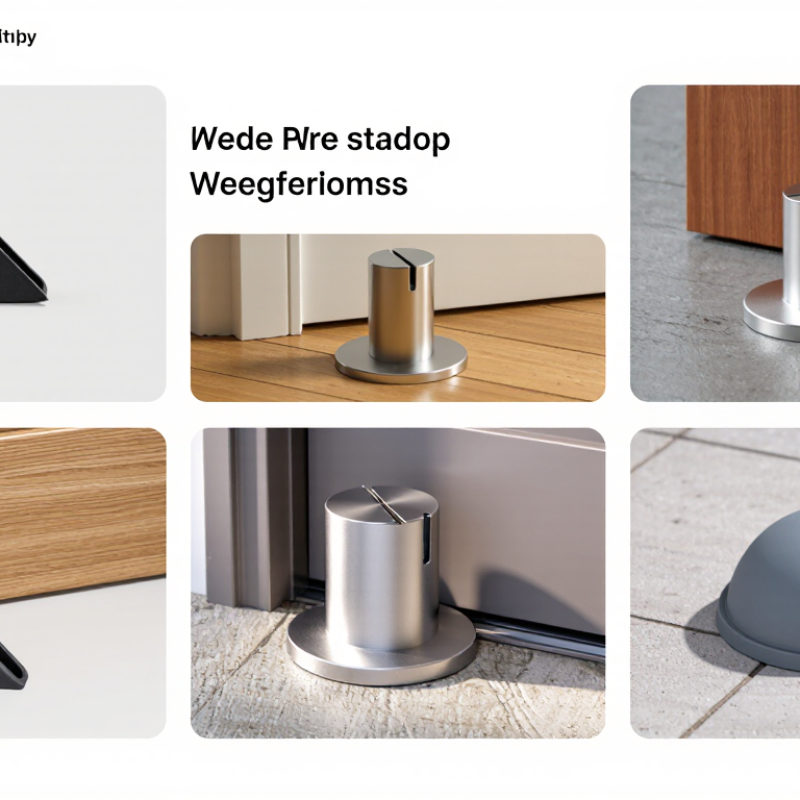
Start with the door itself, not the stopper catalog. Measure the gap beneath the door, its width, weight, and swing direction. A thick solid door may need a sturdier wedge or fixed stop than a lightweight interior door. Check whether the door has a closer, since repeated closing pressure can shift a loose stopper. Measure twice. A few millimeters can matter when the floor is uneven.
Next, inspect the floor where the stopper will sit. Smooth tile, polished stone, textured concrete, and carpet offer very different grip. A rubber base may hold well on tile but collect dust or slide on a rough surface.
Consider the operating conditions, too: frequent foot traffic, drafts, damp entryways, and temperature changes can affect placement and wear. For a busy doorway, test the stopper during normal use before ordering in volume. It is easy to focus only on holding force; that can be the wrong priority if the stopper scratches the floor or becomes a trip hazard. Conditions vary between buildings, so note any uncertainty in your measurements and request a sample when fit is critical.
Door stoppers differ in how they control movement and where they work best. Wedge stoppers are portable and suit many floor types, but they need regular repositioning. Spring or rigid wall-mounted stops protect doors from striking nearby walls. Magnetic models hold a door open, which helps in busy corridors, though their holding strength varies.
Material affects durability and appearance. Stainless steel resists corrosion in damp settings, while solid brass offers a substantial feel but may show fingerprints. Rubber tips cushion impact and grip smooth floors; check that replacements are available. Plastic can reduce cost and weight, yet may wear faster under frequent use. Small details matter. A narrow tip may leave marks on soft flooring.
Mounting options deserve equal attention. Adhesive-backed models avoid drilling, but dusty paint or textured tile can weaken the bond. Screw-mounted floor and wall stops are more secure when installed into suitable backing. Check door clearance, baseboard height, and the swing path before choosing. Measure twice. For global purchasing, request dimensions, material specifications, and installation instructions in consistent units. Test a sample on the actual surface when possible; product descriptions cannot reveal every fit issue. There is no universal best type, and buyers sometimes overlook the substrate until installation day.
For global buyers, holding strength should be checked on the actual floor or wall surface, not inferred from a product photo. Ask for test results, the test method, mounting conditions, and cycle count. A force figure without these details can be misleading. On tile, rubber may grip well; on dusty concrete, the same stopper may slide. Test both a light push and a firm door impact. A door that keeps moving is not a small flaw.
Durability depends on more than the outer material. Check hinge wear, rubber hardening, corrosion resistance, and whether screws loosen after repeated use. Safety needs equal attention: look for rounded edges, secure mounting, and a low profile that will not catch shoes or wheels. The WHO’s Global Report on Falls Prevention in Older Age estimates 37.3 million falls each year are serious enough to require medical attention. That figure is not specific to door stoppers, but it puts trip hazards in perspective. The U.S. Access Board’s ADA Standards set a 5-pound-force limit for opening most interior hinged doors; this is not a stopper holding-strength rating. It is an easy distinction to miss.
Before ordering door stoppers, define measurable requirements: material, dimensions, finish, mounting method, and holding force. Request test records tied to the actual model, not a similar item. For coated metal parts, ISO 9227 describes salt-spray testing; it does not certify a product or set your acceptance threshold. Agree on that threshold in writing. Check a production sample for sharp edges, loose screws, and uneven coating. Small defects show up quickly.
Verify the supplier’s registered business details, factory location, and quality-control process. Ask who performs inspections and whether reports identify the batch being shipped. A polished PDF can still hide weak testing. I would cross-check documents and inspect a sample; that takes time, but skipping it can cost more. Details matter. Set shipping terms with a named place, clear responsibility for export packing, freight, insurance, and import handling. UNCTAD’s Review of Maritime Transport 2024 reported that the Shanghai Containerized Freight Index nearly tripled between December 2023 and mid-2024, amid shipping disruptions. Rates change. Compare written freight quotations, confirm carton dimensions and gross weight, and calculate landed cost before approving the order.
| No. | Buying Tip | What to Verify | Practical Check Before Ordering |
|---|---|---|---|
| 1 | Define the application | Confirm whether the stopper is intended for residential, commercial, outdoor, or high-traffic use. Floor, wall, hinge, and wedge types have different installation and performance requirements. | Share the door type, door weight, opening angle, floor or wall material, and expected usage with the supplier. Request a sample for the intended surface. |
| 2 | Check applicable requirements | There is no single global safety standard that covers every door stopper. Requirements can depend on the destination market, installation location, materials, and intended users. | Ask the importer or local compliance adviser to identify applicable building, fire, accessibility, or chemical rules. Request test reports that match the exact product and material. |
| 3 | Review material and finish | Verify the stated material, coating, and components. For damp or outdoor locations, check corrosion resistance; for floor contact, check that the base material is suitable for the floor finish. | Request a material specification and, when relevant, a coating or corrosion-test report. Inspect the sample for sharp edges, finish defects, and staining or marking on the floor. |
| 4 | Agree on performance criteria | Holding force, impact resistance, cycle life, and suitable door weight are product-specific; do not assume a universal pass level applies to every design. | Write measurable acceptance criteria into the purchase specification and ask for the test method, sample size, results, and product configuration used for testing. |
| 5 | Check chemical and market-specific claims | Rules such as REACH requirements in the European Union and chemical restrictions in other markets may apply depending on the product and materials. A general declaration does not replace product-specific evidence. | Request a current declaration or relevant laboratory report identifying the tested product, materials, date, and applicable requirements. Confirm whether any market-specific labeling is needed. |
| 6 | Verify supplier credentials | Check the supplier’s legal business details, manufacturing or trading role, quality controls, and ability to produce the quoted design. A quality-management certificate does not by itself certify product safety. | Verify certificate validity, issuing body, site, and scope where certificates are provided. Compare the business details on the quotation, contract, and payment instructions. |
| 7 | Approve samples and production controls | Confirm the approved sample represents the final materials, dimensions, finish, packaging, and accessories. Ask how incoming materials and finished goods are inspected. | Keep a signed or otherwise traceable sample reference. Agree on inspection criteria, defect classifications, batch identification, and corrective-action steps before production. |
| 8 | Assess packaging and transport protection | Packaging should protect the finish and prevent parts from moving or damaging one another. Carton strength and packing method should suit the shipping route and handling conditions. | Request carton dimensions, gross and net weights, units per carton, and packing photos. For fragile or higher-risk shipments, agree on a suitable drop or transport test before dispatch. |
| 9 | Specify the Incoterm and named place | Incoterms® 2020 clarify which party handles costs, risks, and specified export or import responsibilities. FOB is for sea and inland-waterway transport; FCA can be used for any mode. | State the chosen rule, named port or place, and version in the contract, for example, “FCA [named place], Incoterms® 2020.” Confirm who arranges freight, insurance, customs clearance, and delivery. |
| 10 | Confirm landed cost and shipping documents | Freight, insurance, duties, taxes, customs fees, and destination handling can affect the final cost. Required documents depend on the destination and shipment arrangement. | Before payment, confirm the shipment schedule, quotation validity, packing list, commercial invoice details, country-of-origin information, and any destination-specific document or labeling needs. |
For global buyers, a door stopper’s unit price is only one part of the decision. Compare the landed cost, including packaging, freight, duties, spare parts, and any local installation labor. A low quote can become expensive if mounting screws are missing or the product needs frequent replacement. Ask suppliers to specify what is included. Small details matter.
Installation needs depend on the stopper type and the site. A floor-mounted model may require drilling into tile or concrete, while a wall-mounted one needs a secure fixing point and enough clearance behind the door. Check door weight, swing direction, and skirting-board height before ordering. A template can help, but confirm its measurements against the actual site. I would not assume every installer reads the same diagram.
Maintenance is part of the total cost, too. Rubber tips may wear down, and exposed metal can collect dust or show scratches in busy corridors. Ask how replacement parts are supplied and whether routine cleaning needs special products. For facilities with many doors, even a few minutes of upkeep per unit adds up. It is easy to overlook. Comparing purchase, fitting, and upkeep costs side by side gives buyers a more realistic view than comparing prices alone.