
How to Choose the Best Food Display Stands for Your Business

Choosing the right Food Display Stands can influence sales, hygiene, customer flow, and daily service efficiency. A beautiful stand is not automatically practical. It may block product labels, crowd a narrow counter, or make refilling awkward during busy hours.

Retail consultant Paco Underhill’s well-known reminder, “Retail is detail,” applies strongly to food presentation. The angle of a cake stand, the height of a pastry riser, and the spacing between trays can change how customers browse. Small choices matter. Clear sightlines encourage quick decisions, while stable construction protects delicate products from unnecessary movement.

This guide explores how to select Food Display Stands for bakeries, cafés, markets, and catering businesses. It considers material quality, cleaning routines, product weight, available space, and customer accessibility. Acrylic can create a light, modern appearance. Wood may add warmth. Stainless steel often suits demanding service areas. Each option has weaknesses, too.

There is no perfect stand.

A low display may improve access but reduce visual impact. A tall stand can create attractive layers but hide smaller items. These trade-offs deserve honest evaluation. Business owners should observe real customer behavior, not rely only on showroom appearance. Watch where people pause, what they touch, and which products remain overlooked.

Reliable decisions come from combining visual merchandising knowledge with everyday operating experience. The best Food Display Stands support the product, simplify service, and remain dependable after repeated use. Sometimes, the first choice will need changing. That is not failure. It is useful evidence.
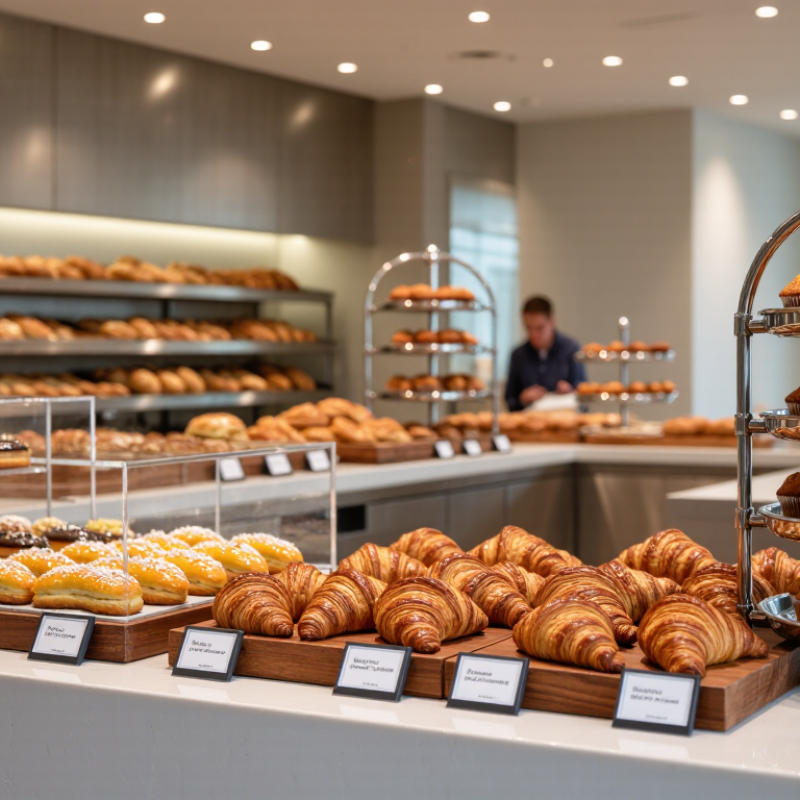
How to Choose the Best Food Display Stands for Your Business

Define Your Food Display Needs and Business Goals

Before choosing a stand, define what your business must achieve. A bakery may need to protect delicate pastries, while a busy café may need faster customer flow. Write down your daily menu, peak service hours, average item size, and available counter space. Measure twice. I once underestimated the height of takeaway boxes. The display looked attractive but blocked the staff’s view. That mistake changed how I assess fixtures.

Your goals should guide the structure, not the other way around. If you want higher impulse sales, place small, clearly priced items near the payment area. If freshness matters most, choose a design that supports clean rotation and easy replenishment. Consider sneeze protection, stable shelves, smooth surfaces, and safe staff access. Food-contact areas should use suitable, cleanable materials. Maintain them according to local hygiene requirements. Ask suppliers for care instructions and load limits. Do not rely on appearance alone.

Think about the customer’s actual movement. Can someone see the product from two steps away? Can an employee remove one portion without touching nearby food? Test the stand during real service, with trays, labels, gloves, and queues in place. Photograph the setup from the customer’s eye level. Small details matter. Still, not every goal will fit the budget or counter. A simpler stand may improve service more than a costly centerpiece. Review sales, waste, cleaning time, and staff feedback after two weeks. Then adjust your choice.

Compare Stand Types, Materials, and Display Capacity

How to Choose the Best Food Display Stands for Your Business

Choosing a food display stand starts with product behavior, not appearance. Tiered stands suit packaged snacks, pastries, and grab-and-go items. They improve visibility while using limited counter space. Refrigerated stands protect salads, dairy products, and cut fruit. Heated units support cooked foods that need stable serving temperatures. The FDA Food Code 2022 recommends cold holding at 41°F (5°C) or below, and hot holding at 135°F (57°C) or above. Temperature control must shape the stand design.

Material affects hygiene, durability, and visual quality. Stainless steel handles frequent cleaning and resists moisture. Acrylic creates a clear view but scratches more easily. Laminated wood adds warmth, although damaged edges can absorb spills. Glass looks premium and supports visibility, but it increases weight and breakage risk. A removable tray helps staff clean narrow corners. Small details matter.

Capacity needs a measured approach. Estimate peak-hour demand, then leave enough air around each item for easy selection. Overfilled shelves look cheaper and may slow replenishment. Underfilled stands waste valuable space. The 2024 UNEP Food Waste Index reported 1.05 billion tonnes of food waste in 2022, with retail contributing 12%. Better capacity planning can reduce unsold exposure, though the stand alone cannot solve waste. A practical test uses real packaging, tray dimensions, and one full service period. Capacity estimates are imperfect. Staff movement often reveals the missing problem.

Evaluate Hygiene, Safety, Stability, and Accessibility

How to Choose the Best Food Display Stands for Your Business

A good display stand must protect food, not merely present it attractively. The FDA Food Code 2022 requires food-contact surfaces to be smooth, corrosion-resistant, nonabsorbent, and easy to clean. Choose removable trays, rounded corners, and sealed joints. These details reduce trapped crumbs and moisture. CDC estimates that foodborne illnesses cause about 48 million illnesses and 128,000 hospitalizations annually in the United States. Hygiene deserves serious attention.

Safety also depends on temperature control. The FDA Food Code recommends keeping cold food at 41°F or below and hot food at 135°F or above. Check whether the stand supports covers, sneeze protection, and accurate thermometer placement. Stability needs a physical test. Press the front edge gently. Load every shelf with its intended products. A beautiful stand can still wobble. That is a design failure. Accessibility matters too. ADA Standards recommend accessible routes and clear floor space, commonly 30 by 48 inches for a forward approach. Keep signs readable and serving areas reachable. Not every customer has the same height, strength, or mobility.

Tips: Inspect stands before opening and after busy service. Clean high-touch edges frequently. Record temperatures. Recheck loose screws weekly. If staff avoid using a stand, ask why. Their feedback may expose a practical flaw that a purchasing checklist misses.

Match the Design to Your Brand and Store Layout

Food display stands should feel like part of your brand, not temporary equipment. A warm wooden finish can support a handmade, welcoming identity. Clean metal and clear acrylic may suit a precise, modern store. Choose colors that repeat your walls, packaging, or menu signs. Consistency builds recognition before customers read a product label.

Your store layout matters just as much. Measure the counter depth, customer flow, and staff working space before ordering stands. A tall stand can create useful visibility, but it may block sightlines across a narrow counter. Low, angled stands often work better near checkout areas. Leave enough room for hands, trays, and daily cleaning. Small details affect speed.

I once selected a beautiful stand that made a pastry section look crowded. It matched the interior, but customers struggled to see the lower items. The design looked right in a product photo. It worked poorly in real service. Test one stand during your busiest hour, then observe where people pause and reach. Check whether staff can restock without moving nearby products. A practical design may seem less impressive, yet it often protects the customer experience and your brand’s visual discipline.

How to Choose the Best Food Display Stands for Your Business - Match the Design to Your Brand and Store Layout

Food Display Stand Type Typical Dimensions Best Product Use Recommended Store Position Visual Style Key Planning Consideration Suitable Business Layout
Tiered Countertop Stand 30–60 cm wide
25–40 cm deep
30–55 cm high
Packaged snacks, pastries, muffins, small bakery items and impulse products Checkout counter, service counter or compact product island Efficient, approachable and easy to merchandise Use graduated shelves so products remain visible from the customer side without taking up much counter space. Small cafés, bakeries, kiosks and takeaway counters
Single-Tier Product Riser 20–45 cm wide
15–30 cm deep
8–18 cm high
Signature products, plated desserts, jars, boxed goods and premium packaged items Front counter, display table or focal point within a cabinet Minimal, refined and product-focused Leave enough surrounding space to create visual emphasis and prevent the display from appearing crowded. Premium cafés, delicatessens, boutique stores and compact retail spaces
Freestanding Multi-Level Rack 60–100 cm wide
35–60 cm deep
120–180 cm high
Packaged food, bottled drinks, bread, gift sets and larger product ranges Entrance zone, aisle edge or central merchandising area High-impact, structured and easy to browse Keep the lowest shelf accessible and avoid placing tall products where they block sightlines across the store. Grocery stores, market halls, food shops and spacious cafés
Wall-Mounted Display Shelf 60–120 cm wide
20–35 cm deep
20–35 cm shelf spacing
Packaged goods, coffee accessories, condiments, dry foods and merchandise Along a wall, behind a service counter or beside a queue Clean, organized and space-saving Confirm wall strength and mounting height; keep frequently purchased products within comfortable reach. Narrow stores, cafés with limited floor area and service-led businesses
Acrylic or Glass Case 45–120 cm wide
30–60 cm deep
35–110 cm high
Cakes, chocolates, decorated pastries, sandwiches and hygiene-sensitive foods Service counter or customer-facing preparation area Clear, hygienic and presentation-led Provide clear visibility, easy cleaning access and suitable temperature control where the food requires it. Specialty bakeries, confectionery shops and prepared-food counters
Basket or Crate Display 30–60 cm wide
25–45 cm deep
15–40 cm high
Fruit, vegetables, bread, rustic packaged foods and promotional items Entrance, produce section or low-level floor display Natural, informal and market-inspired Choose stable containers with smooth, cleanable surfaces and avoid excessive stacking that can damage products. Farm shops, markets, casual food stores and natural-themed interiors
Refrigerated Display Counter 90–250 cm wide
70–90 cm deep
110–130 cm high
Sandwiches, salads, dairy products, chilled desserts and ready-to-eat meals Service line, ordering point or high-traffic front-of-house area Professional, functional and freshness-oriented Allow space for ventilation, electrical access, staff movement and compliance with required food-safety temperatures. Delis, cafés, convenience stores and prepared-food retailers
Rotating Carousel Stand 30–55 cm diameter
35–70 cm high
Small packaged snacks, greeting cards, condiment samples and compact accessories Counter corner, queue area or small promotional zone Interactive, flexible and suitable for browsing Ensure the carousel can rotate freely without interfering with payment equipment or customer circulation. Convenience shops, cafés, kiosks and checkout-focused layouts

Planning note: Dimensions are typical planning ranges rather than fixed specifications. Confirm the final footprint, load capacity, cleaning requirements, accessibility, and food-temperature needs before purchasing or installing a display stand.

Set a Budget and Select the Best Supplier

How to Choose the Best Food Display Stands for Your Business

Set a Budget and Select the Best Supplier

A realistic budget should include more than the display stand’s listed price. Add shipping, assembly, replacement parts, and storage costs. A low quote can become expensive after delivery. My early estimate was wrong. I ignored custom packaging and paid extra for safer transport.

Measure your counter, shelves, and busiest service areas before requesting quotes. Record the stand’s width, height, weight, and load capacity. Ask whether its materials suit direct food contact and frequent cleaning. Stainless steel, sealed wood, and durable acrylic can support different presentation styles. Request samples before placing a large order. A sample reveals sharp edges, unstable feet, or difficult cleaning points.

A reliable supplier should provide clear specifications, production timelines, and quality records. Ask about minimum order quantities and replacement procedures. Check how quickly they answer practical questions. Slow replies may create problems when stock arrives late. Compare at least three written quotations. Look beyond unit price. Include material quality, delivery terms, inspection options, and after-sales support.

Keep a small reserve in the budget. Displays can break during busy service or seasonal changes. Do not choose the cheapest option automatically. I once valued appearance over stability, and staff disliked the stands. A short trial with real plates, trays, and cleaning routines often exposes weaknesses that photographs hide.

How to Choose the Best Food Display Stands for Your Business

Set a clear budget first, then compare suppliers according to product quality, customization, delivery reliability, and after-sales support. The chart below presents a practical planning budget for a food display stand purchase.

Budget guidance: A balanced purchasing plan reserves the largest share for the stand itself, while keeping enough budget for customization, shipping, installation, and contingency costs.

Facebook Twitter Instagram Linkedin Youtube