How to Choose a Steel Fire Rated Shutter for Your Business
Choosing a Steel Fire-Rated Shutter is not just a matter of selecting a sturdy-looking door. It affects how a business separates areas, manages daily access, and responds to a fire emergency. A shutter may appear suitable in a showroom, yet its performance depends on the complete assembly, including the curtain, guides, motor, controls, and installation. Small details matter.
Start with the opening itself. Measure its width, height, surrounding structure, and available headroom. Then consider how often the shutter will operate, who needs access, and whether the area faces dust, moisture, or frequent impact. A warehouse loading bay has different demands from a shop corridor. There is no universal best choice.
Check product documentation carefully. Confirm the stated fire rating and the conditions under which it applies. Ask whether the tested configuration matches the proposed shutter, and have a qualified professional assess the site and installation requirements. Local building and fire-safety requirements vary, so do not rely on a sales description alone. That can be an easy mistake.
It is tempting to compare products by price or rating alone. I would not treat either as the whole story. Service access, replacement parts, operating controls, and routine inspection also affect long-term reliability. Even a thorough checklist can miss a practical issue, such as whether staff can reach the controls during a busy shift. This guide explains the questions worth asking before you choose, helping you compare options with care rather than guesswork.
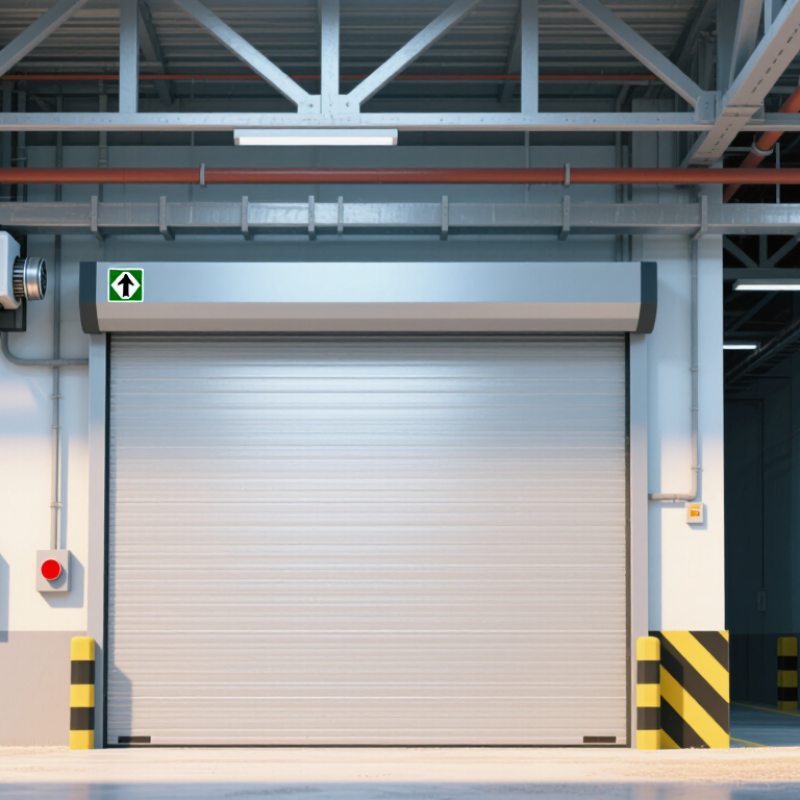
Understand the Role and Fire-Rating Levels of Steel Shutters
A steel fire shutter protects an opening in a fire-rated wall, helping limit the passage of flames and heat between areas. It is not a substitute for the wall itself. NFPA’s Fire Loss in the United States During 2022 estimated 1,504,500 fires and $18 billion in property damage nationwide. Not a small risk. A shutter’s role is practical: when activated, its curtain descends along side guides to close a doorway, service counter, or other opening.
Fire-rating levels indicate how long an assembly performed under a specified test; common labels include 45, 60, 90, and 180 minutes. The right level depends on the opening’s required protection, the surrounding construction, and applicable codes—not simply the highest number available. Standards such as UL 10B or UL 10C address fire testing, while NFPA 80 covers installation, inspection, testing, and maintenance of opening protectives. Check the complete assembly label, including curtain, guides, and closing mechanism. A rating on paper is not enough if the shutter is poorly fitted or blocked by stored cartons. This detail is easy to overlook. Regular inspections matter, though they can feel like one more task on a busy site.
Assess Your Building Layout and Opening Requirements
Before selecting a steel fire-rated shutter, map the opening in its real operating context. Measure clear width and height between finished surfaces, then record headroom, side room, floor level, and nearby services. A sprinkler pipe, cable tray, or uneven threshold can affect installation and daily movement. Small details matter.
Check what the opening connects: a corridor, loading bay, kitchen, or storage area each brings different traffic and clearance needs. Note whether people or equipment cross it, and whether the shutter could obstruct an exit route when deployed. NFPA 80, the Standard for Fire Doors and Other Opening Protectives, addresses installation and maintenance; confirm the applicable edition and project requirements with the local authority or fire-protection professional. Measure twice.
NFPA’s Fire Loss in the United States During 2022 estimated 1,504,500 fires and about $18 billion in property damage.
Those figures do not determine a shutter’s rating, but they underline why opening protection deserves careful planning. Compare the measured opening with tested assembly limits and required fire-resistance ratings, rather than assuming a nominal size will fit. One easy-to-miss issue is actual headroom: a drawing may look generous, yet ducts or beams can reduce usable space. Recheck on site before ordering.
Compare Shutter Designs, Materials, and Operating Methods
A steel fire-rated shutter should match the opening, traffic, and fire strategy—not just the available wall space. A curtain-style shutter rolls above the opening, preserving floor area, while a side-sliding design may suit sites with limited headroom. Check nearby lights, pipes, and beams before choosing. Small obstructions matter.
Steel slat thickness, curtain construction, and guide design affect durability and fit. In a busy loading bay, impact-resistant guides can help withstand repeated knocks from carts and pallets. A powder-coated finish may suit dry indoor areas, but damp or corrosive environments need a carefully specified protective finish. Material choice alone does not establish fire performance; verify that the complete shutter assembly has suitable test documentation and a rating appropriate to the opening.
Operating methods also change daily use. A manual chain or crank can be simple, but it may slow staff during frequent movements. A motorized shutter is convenient for larger openings, though it needs planned maintenance and a reliable connection to the building’s fire-alarm system where required. Ask how the shutter closes during a power interruption and how staff can test it safely. The right arrangement is not always obvious. Walk the route, note who uses the opening, and have a qualified installer check the dimensions and applicable requirements before ordering.
Verify Safety Standards, Certifications, and Installation Needs
Before choosing a steel fire-rated shutter, match its certification to the opening and the required fire-resistance period. Check the label and listing documents for the tested assembly, permitted dimensions, guides, curtain, bottom bar, and release mechanism. A certificate for a similar shutter is not enough. Look for testing to a recognized standard, such as NFPA 252 or UL 10B where applicable, and confirm acceptance with your local building or fire authority. Details matter.
The NFPA report Fire Loss in the United States During 2023 estimated 1.39 million fires nationwide, a reminder that passive protection depends on more than a product rating. Confirm that the wall and supporting structure suit the shutter’s weight and installation details. Ask the installer to document clearances, controls, and commissioning tests, including whether the shutter closes fully without obstruction. NFPA 80 provides inspection, testing, and maintenance requirements for fire door assemblies; check the edition adopted in your jurisdiction. Keep those records accessible. Paperwork is easy to overlook, and a correctly listed shutter can still underperform if installed poorly or blocked by stock, carts, or a floor mat. Have the maintenance plan specify who checks operation and how defects are recorded.
Evaluate Maintenance, Durability, and Long-Term Costs
A steel fire-rated shutter is a long-term asset, not just a line on a renovation budget. Compare the full opening assembly, including guides, motor, controls, and fire-release components. Confirm its documented rating matches the intended opening and use. Small details matter. A poorly aligned guide can cause scraping, uneven travel, and extra wear.
Ask what routine maintenance involves before you buy. Check whether technicians can reach the motor and controls without moving stored stock or dismantling nearby equipment. A practical inspection should include the curtain, bottom bar, guides, release mechanism, and operating cycle. Keep dated service records; recurring adjustments may signal a deeper alignment or usage problem. Don’t assume a shutter is reliable just because it looks solid.
Durability depends on more than steel thickness. Consider how often the shutter will operate, whether the area is dusty or damp, and how exposed parts resist corrosion. These conditions affect cleaning needs and replacement intervals. Budget for downtime. A lower purchase price may cost more if servicing is difficult or parts wear quickly. Request a written maintenance schedule and ask which components are expected to need attention over time. Leave room in the budget for inspection, repairs, and occasional operational disruption.
