China Top 10 Home Entry Door Manufacturers for Buyers
Choosing a reliable manufacturer for home entry doors involves more than comparing catalog photos or unit prices. Buyers must consider material, security features, weather resistance, finish quality, and the supplier’s ability to meet project requirements. China’s door industry includes manufacturers serving residential projects, distributors, and custom-building markets. Their product ranges can include steel, aluminum, timber, and composite designs.
This guide introduces ten Chinese manufacturers for buyers to investigate. It considers practical factors such as product variety, customization options, production capabilities, quality-control practices, export experience, and responsiveness. These details can help readers prepare focused questions before requesting quotations. Ask about frame dimensions, hardware specifications, packaging, lead times, and inspection procedures. Check product documentation against the requirements of your destination market.
The right choice depends on the project. A coastal home may need finishes suited to humid, salty conditions, while a city apartment may prioritize sound reduction and a compact opening. Look closely at samples. Check welds, corner joints, seals, and how smoothly the lock operates. Small details matter.
No shortlist is perfect. A manufacturer with an impressive catalog may not be the best fit for a small order, and a low quotation can leave important specifications unclear. Treat the rankings as a starting point, not a substitute for due diligence. Confirm capabilities directly, compare like-for-like quotations, and request clear written specifications before placing an order.
How China’s Home Entry Door Market Is Divided by Material and Application
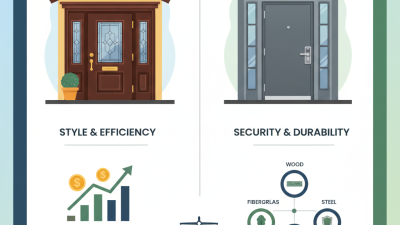
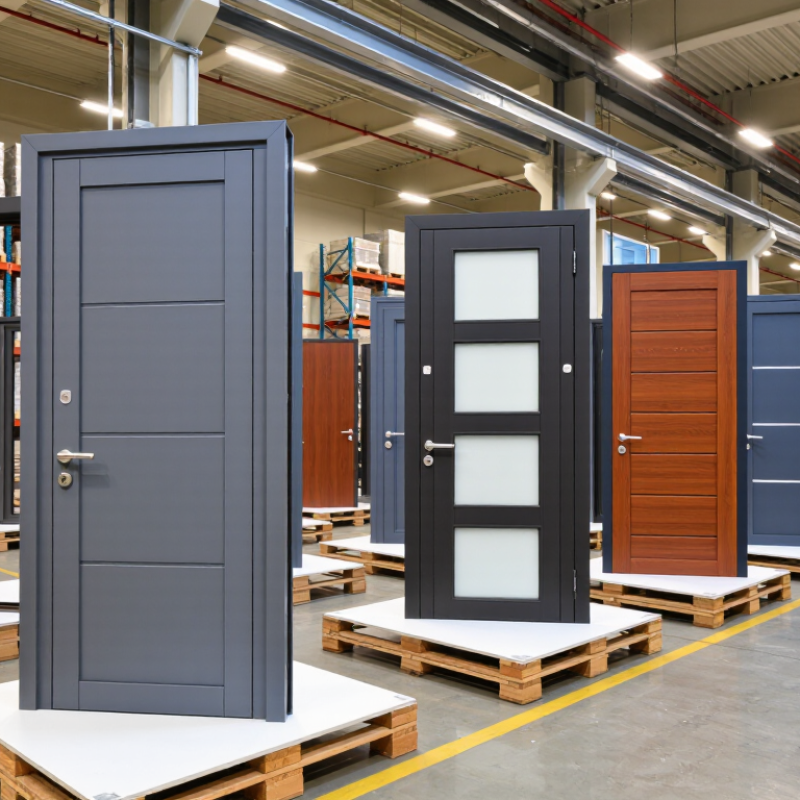
China’s home entry door market is commonly divided by material and intended use. Steel doors are widely selected for apartment entrances, where impact resistance, privacy, and manageable maintenance matter. Their heavier feel can suit shared corridors, though weight and hardware quality affect daily use. Details matter.
Wood and engineered-wood doors are often chosen for villas or homes where interior finishes continue to the entrance. They offer a warmer appearance, but exposure to rain and strong sunlight can cause trouble if the doorway lacks adequate protection. Aluminum-alloy doors appeal to buyers seeking a lighter frame and a contemporary look. Stainless-steel options may suit humid areas, but surface finish and installation still deserve close inspection.
Application changes the specification. A high-rise apartment entrance may need a sturdy door, reliable locking points, and dimensions suited to the building opening. A detached house may require better weather sealing, a suitable threshold, and finishes that tolerate outdoor exposure. Renovation projects bring another constraint: existing wall dimensions can limit the available frame and opening direction. The categories overlap, and material alone does not tell buyers how a door will perform. Ask suppliers for clear product dimensions, finish details, hardware information, and installation requirements before comparing quotations.
China Top 10 Home Entry Door Manufacturers for Buyers — How China’s Home Entry Door Market Is Divided by Material and Application
This qualitative guide maps common door materials to typical residential applications. A score of 2 means a typical fit, 1 means an application-dependent option, and 0 means less typical. It is a category overview—not sales, production, or market-share data.
Which Security Standard Matters: EN 1627 Classifies Resistance into Six RC Levels
EN 1627 classifies burglar-resistant doors into six numbered resistance classes, from RC1 to RC6. RC1 offers the lowest resistance; RC6 is intended for more demanding attack conditions. The standard works alongside EN 1628, EN 1629, and EN 1630, which assess static loading, dynamic loading, and manual attack. RC2N and RC2 are variants, not extra numbered classes; the “N” indicates different glazing requirements. Small label, meaningful difference.
Eurostat’s 2022 police-recorded crime data reported about 1.5 million burglaries across the European Union. That figure does not show how many involved doors, but it gives buyers useful context: entry security deserves careful checking. For a project, request the test certificate for the complete doorset, not just the lock or door leaf. Check that the frame, hinges, glazing, and installation match the tested configuration. A strong door installed poorly may underperform. Also, an RC rating is not a guarantee against every attack; it describes performance under specified test conditions. Ask which class suits the building’s location and risk, rather than simply choosing the highest number.
How to Compare China’s Top 10 Manufacturers by Products, Certifications, and Capacity
Comparing China’s top 10 home entry door manufacturers requires more than matching catalog photos. Check whether each factory makes steel, aluminum, timber, or composite doors, and ask for drawings, hardware specifications, and test reports for the exact model. The International Energy Agency reported that buildings accounted for about 30% of global final energy use in 2022. That makes insulation and airtightness worth checking, not just appearance. Look for tested thermal-performance figures and confirm which door configuration they cover.
Certifications need careful reading. Verify the issuing body, validity dates, factory scope, and whether the certificate covers the product you plan to buy. China’s national output is not a factory’s capacity: World Steel Association’s World Steel in Figures 2024 records 1,019.1 million tonnes of Chinese crude-steel production in 2023, but that figure says nothing about a door supplier’s monthly output. Request recent production records, typical lead times, and evidence of in-house testing. A site audit helps, though one visit may not reveal seasonal delays or subcontracting.
Tips: Ask for a recent production schedule and inspect a finished sample. Compare stated capacity with equipment, shift patterns, and confirmed orders. Brochures can look convincing. I would still verify the details.
Which Door Metrics Matter: U-Value, Air Leakage, Water Tightness, and Security
When comparing Chinese entry-door manufacturers, request test reports for the complete door assembly, not just the panel. A lower U-factor means less heat transfer, but compare products tested in the same configuration. The U.S. Department of Energy’s Energy Saver estimates that windows account for about 25–30% of residential heating and cooling energy use. That figure is not door-specific, but it shows why the whole building envelope matters. Check that the U-factor comes from an NFRC-certified rating or an equivalent, clearly documented method. Small differences can matter. So can installation.
For air leakage, ask for results under ASTM E283 and note the test pressure and leakage rate; numbers without conditions are hard to compare. Water resistance should be supported by ASTM E331 or E547 testing, with the tested pressure stated. For security, review the lock and hardware evidence, including testing to ANSI/BHMA A156.40 for residential deadbolts where applicable. A strong lock cannot compensate for a weak frame or poor anchoring. Ask what was tested: door, frame, hinges, and hardware together, or only separate components? A caveat worth keeping in mind: laboratory results do not guarantee equal performance after shipping and installation. Request installation details and inspect the finished sample closely.
How Buyers Can Verify Factory Claims, Samples, Lead Times, and Export Terms
A supplier’s website can show impressive door lines, but photographs alone do not confirm factory capacity. Ask for a live video tour, including the cutting area, assembly benches, and finished-goods storage. Compare the company’s registered business details with the name on its quotation and bank documents. Request recent production records or a third-party audit where practical. A video call is useful, but it is not a full inspection.
Order a sample before approving bulk production. Check the frame dimensions with a tape measure, test the hinges several times, and inspect paint or veneer under bright light. Ask whether the sample uses the same core, hardware, and weather seals as the proposed order. Small differences matter. Keep photos and a written list of approved details. I once treated a sample as final proof; that was too optimistic.
Get lead times in writing, with separate dates for sample approval, production, and dispatch. Ask what could shift the schedule, such as custom finishes or peak-season workload. Confirm the shipping term and exact named place, then clarify who arranges freight, insurance, export documents, and destination charges. Do not rely on a vague promise like “delivery included.” Clear records help, though even careful planning cannot remove every delay.