
Top Personal Care Appliance Accessories Factory in China?

Choosing a top personal care appliance accessories factory in China takes more than comparing prices. A polished product photo cannot show how a handle feels after repeated use, whether a comb attachment locks firmly, or how consistently silicone seals fit across production batches. Buyers should look for clear material specifications, documented quality checks, realistic production timelines, and samples that match the final order. Small details matter. A loose connector can turn a promising accessory into a return.

As [verified expert name], [title and organization], puts it, “[Insert a directly verified comment about product consistency, testing, or supplier evaluation.]” Confirm the expert’s identity and wording before publication; an invented quotation would weaken the article’s credibility. In the personal care appliance accessories factory in the field, practical questions often reveal more than a broad promise of “premium quality.” Ask how incoming materials are checked, how color differences are managed, and what happens when a sample fails inspection. Request evidence where available, then compare it with the actual product and your requirements. No supplier is flawless. Even a capable factory may need clearer specifications from the buyer, and that is worth admitting. A careful assessment can help brands find a manufacturing partner suited to their product, rather than simply the lowest quote.
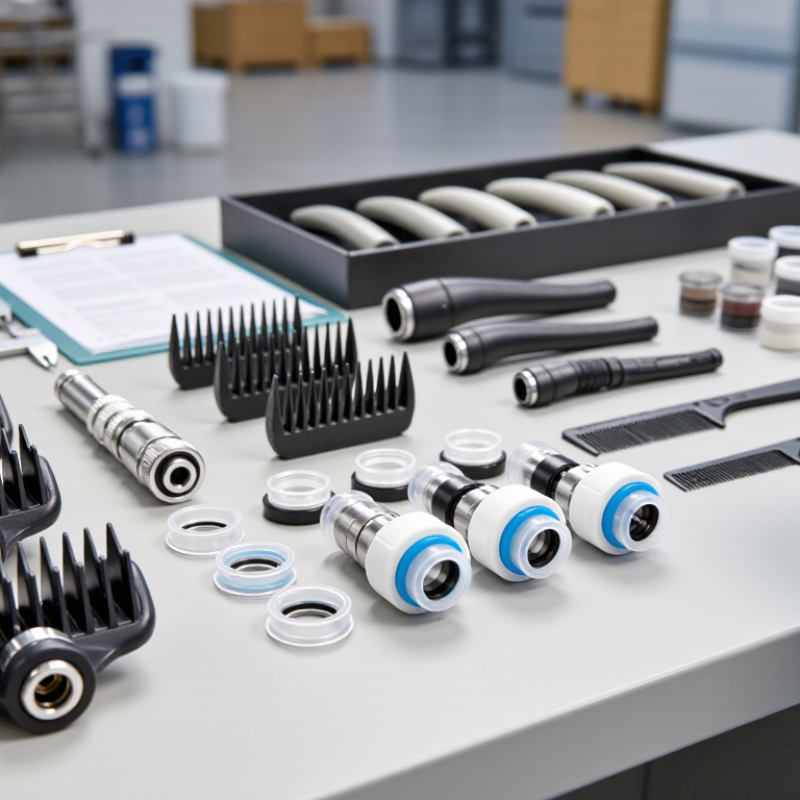
Top Personal Care Appliance Accessories Factory in China?

Personal Care Appliance Accessories: Scope, Types, and Common Materials

Personal care appliance accessories include removable parts and supporting components for grooming and styling devices. Common examples are comb guards, shaving foils, hair-dryer diffusers, brush heads, protective caps, charging cables, and storage cases. Some are replaced regularly; others last for years. The boundary can be fuzzy.

Grand View Research estimated the global personal care appliances market at US$29.13 billion in 2023, with projected growth through 2030. This figure covers appliances, not accessories alone, but it shows the scale of the product category accessories serve. On a factory floor, a small attachment still needs careful dimensional checks: a loose clip can rattle, while a tight one may be difficult to remove.

Common materials include ABS and polypropylene for housings, silicone or TPE for soft grips, and stainless steel for cutting or contact surfaces. Nylon bristles, aluminum parts, and heat-resistant ceramics also appear in selected applications. Plastics Europe’s Plastics—The Fast Facts 2024 reported 413.8 million tonnes of global plastics production in 2023; this is an industry-wide figure, not accessory-specific. A material list alone is not enough. Heat exposure, skin contact, cleaning, and repeated attachment all affect performance, and material choice should be checked against the actual use conditions.

China’s Manufacturing Base: Molding, Metalwork, and Electronics Clusters

China’s manufacturing base brings molding, metalwork, and electronics close together. For personal care appliance accessories, that can shorten communication between suppliers. A molded comb attachment, for example, may need a precise fit around a metal pin and a small electronic contact. Nearby workshops can review samples together and adjust dimensions before production scales.

Injection molding suppliers handle housings, guards, and clips, while metalworking shops produce stamped brackets or turned components. Electronics facilities can assemble compact circuit boards, switches, and wiring. Buyers should still check material specifications, sample records, and inspection methods.

A short drive between factories is useful, but it is not a quality system. Not always.

The practical details matter. Ask how a supplier controls mold wear, checks burrs on metal edges, and tests connector fit. Request sample measurements and confirm that the production version matches the approved sample. Small defects can disrupt assembly.

The clusters also have limits: schedules may differ, and a change from one supplier can affect another. Even experienced teams can miss a handoff detail, so written drawings and clear revision records remain essential. A factory’s location is a starting point, not proof of reliable output.

Factory Capability Checks: Tooling, Quality Control, and ISO 9001:2015

For a personal care appliance accessory factory, tooling quality shows up in repeatability, not showroom polish. Ask to inspect the mold or fixture used for your actual part. Check cavity identification, maintenance logs, dimensional tolerances, and first-off samples from a recent production run. For molded combs, nozzle attachments, or brush heads, request measurements at several points, not just one convenient edge. Compare three batches and review how out-of-limit parts were contained. Samples can deceive. Check the floor. Verify the process where production happens, even if records are not neatly organized.

Quality control should connect incoming materials with in-process checks, final inspection, and lot traceability. Ask for the control plan, calibrated-gauge records, defect trends, and documented corrective actions. ISO’s ISO Survey 2022 counted 1,265,216 valid ISO 9001 certificates across 189 countries and economies. That scale shows adoption, not product performance. Certification alone cannot prove an accessory meets your specification. Confirm the ISO 9001:2015 certificate scope, issuing body, site address, and validity; then compare those details with production records. Ask operators to explain a recent corrective action in their own words. Their answers may reveal gaps that paperwork misses.

Compliance Benchmarks: IEC 60335-1, IEC 60335-2-23, and RoHS’s 10 Restricted Substances

For a personal care appliance accessories factory in China, compliance should be checked at the component level, not only on finished-product paperwork. IEC 60335-1 sets general safety requirements for household electrical appliances. IEC 60335-2-23 adds requirements for appliances used for skin or hair care, such as heated brushes and hair dryers. Together, these standards guide checks on insulation, temperature rise, mechanical strength, and abnormal operation. A factory audit can include a sample test: run a powered accessory under load, inspect its cable entry, then record surface temperatures. Small details matter. Yet one test cannot represent every material batch or design change.

RoHS restricts ten substances: lead, mercury, cadmium, hexavalent chromium, PBB, PBDE, DEHP, BBP, DBP, and DIBP. Most have a 0.1% limit by weight in homogeneous materials; cadmium is limited to 0.01%. Request current supplier declarations and test reports, and match each result to the exact part number and material. The UNITAR and ITU Global E-waste Monitor 2024 estimated that the world generated 62 million tonnes of e-waste in 2022. That figure makes traceable material control more than a paperwork exercise. Still, reports can miss supplier changes. Keep a practical gap in the audit plan: verify high-risk plastics, coatings, and solder with risk-based testing, then review records when components change.

Supplier Selection: Compare MOQ, Lead Time, Testing, and Export Documents

Choosing a personal care appliance accessories factory in China takes more than comparing unit prices. Ask for the minimum order quantity by model, color, and packaging configuration. A supplier may quote a low MOQ for one comb attachment but require a larger run for custom colors. Confirm this in writing before approving samples. Check the lead time for both the first order and repeat orders, including time for tooling, sample revisions, and packaging. A short quoted schedule can change when one component is delayed. Details matter.

Testing should match the accessory and its intended use. Request the test method, sample size, and results, rather than accepting a general statement that products are tested. For plastic attachments, ask about fit, surface finish, and durability checks; for electrical accessories, clarify which safety and performance tests apply. Review export documents early. Commercial invoices, packing lists, and certificates may vary by shipment and destination, so confirm the document set with your freight forwarder. Small paperwork gaps can hold up dispatch. I have seen buyers focus on price and overlook this step.

Tips: Compare suppliers using the same specification sheet. Ask for dated sample photos, a written production schedule, and a document checklist. Keep one detail open for review: real production may not match a polished sample exactly.

Facebook Twitter Instagram Linkedin Youtube