
Blog
7 Best Spectrum Stained Glass Sheets for Sale
Choosing Spectrum Stained Glass Sheets is about more than finding a color that looks beautiful on a screen. The right sheet must also suit your project’s light, texture, cutting needs, and budget. A deep cobalt may glow beside a sunny window, while the same glass can look almost black indoors. Small details matter.
Louis Comfort Tiffany is often credited with saying, “Color is to the eye what music is to the ear.” His words capture stained glass’s visual impact, but choosing glass still calls for practical judgment. Before buying, check each sheet’s stated dimensions, surface texture, and color consistency. If possible, view a sample in both daylight and indoor lighting. Ask the seller about current stock and shipping protection, since glass can arrive chipped despite careful packing. No single sheet suits every design.
This guide compares seven Spectrum Stained Glass Sheets for Sale, focusing on useful differences rather than appearance alone. You’ll find options for bold panels, subtle accents, and projects that need light to pass through clearly. Some sheets may vary slightly between batches, so a perfect match is not guaranteed. That’s worth remembering. The best choice is the one that fits your pattern, workspace, and expectations—not simply the brightest photo.
Understanding Spectrum Stained Glass Sheets and Their Properties
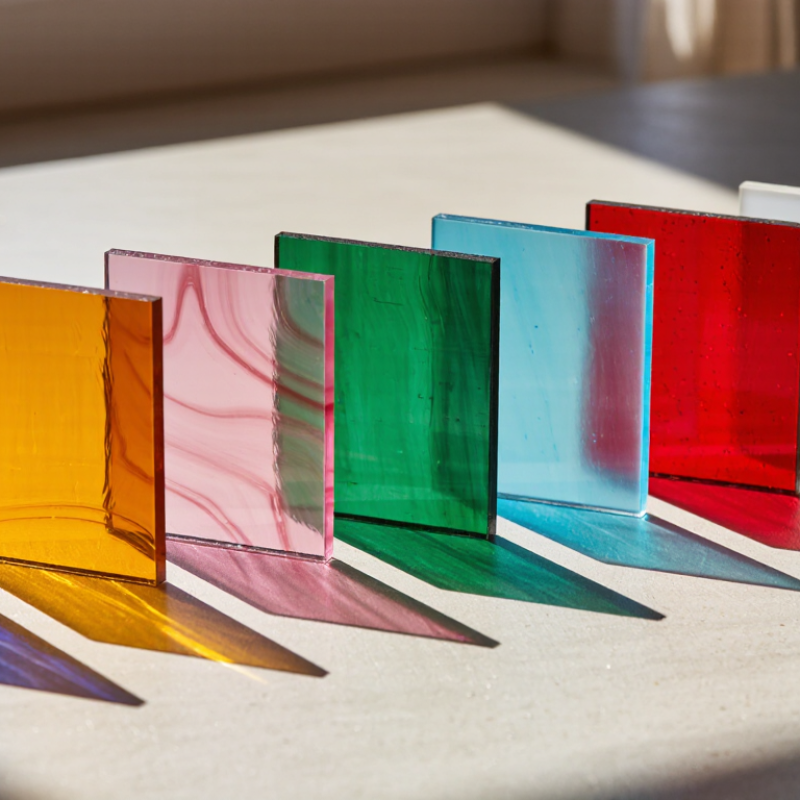
Spectrum stained glass sheets differ in color, transparency, texture, and how they behave under light. Clear glass lets shapes behind it remain visible, while opalescent glass scatters light and softens details. A textured surface can add depth, but it may also distort a pattern viewed through the finished piece.
Light changes everything.
Thickness and surface texture affect cutting and handling. A smooth sheet may score predictably, while ridges or uneven areas can make a clean break harder to judge. Color can also look different beside a window than it does under indoor lamps. Small flaws matter. Before choosing a sheet, check it in the kind of light your project will receive. If combining glass for kiln work, confirm that the pieces are compatible; appearance alone does not establish compatibility.
Tips: Ask for a sample when possible, and hold it against a simple paper pattern near a window. Look for bubbles, color shifts, and surface irregularities. Wear eye protection and gloves while cutting, and keep offcuts contained. A shade that looks perfect in a shop may feel too dark at home. That is worth reconsidering.